
Last updated November 3, 2026
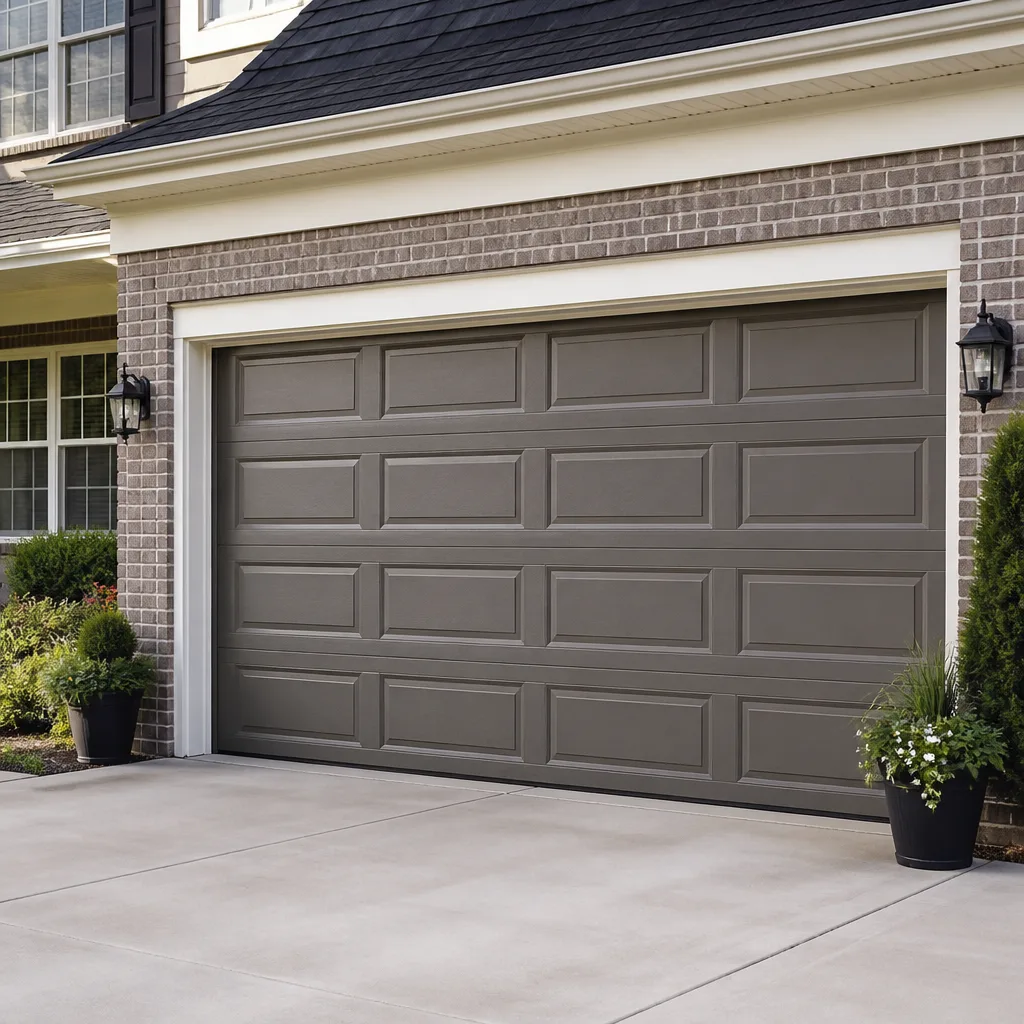 Raised-panel steel
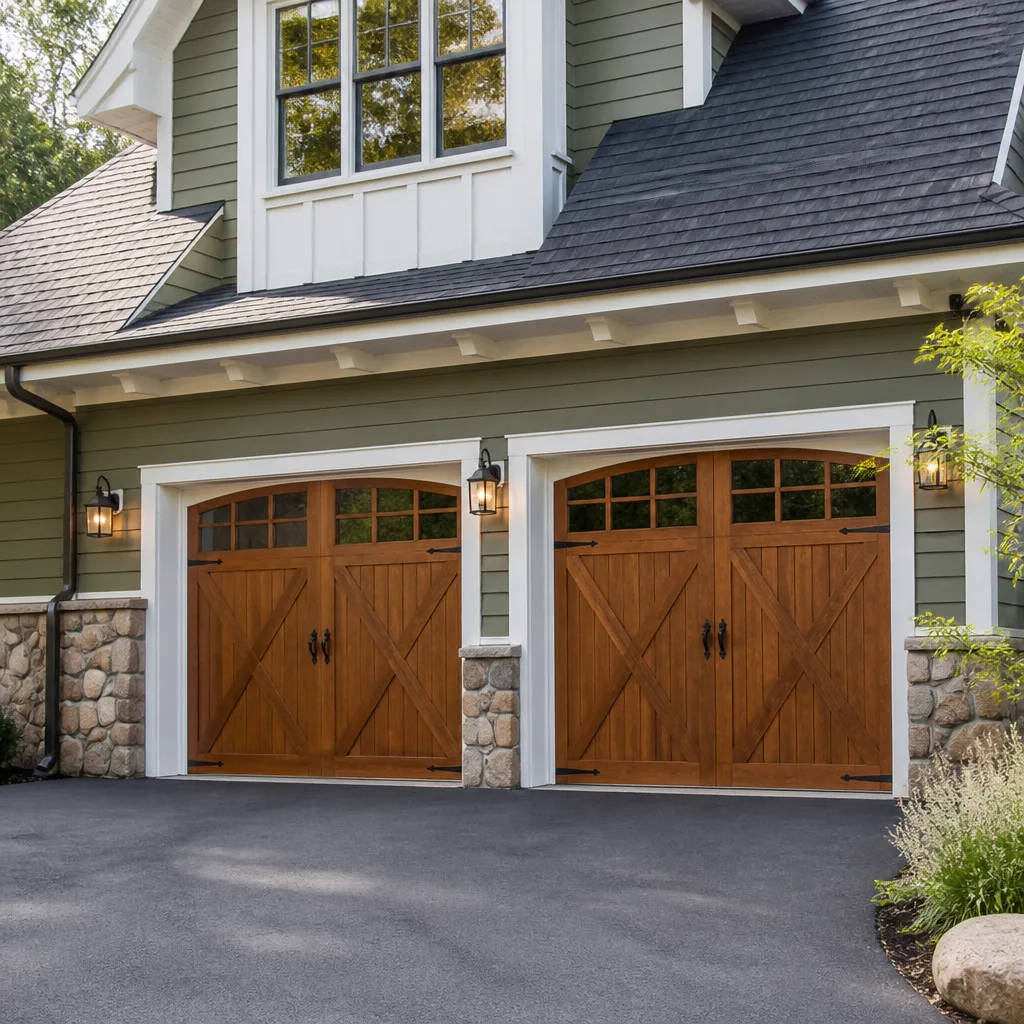 Carriage house
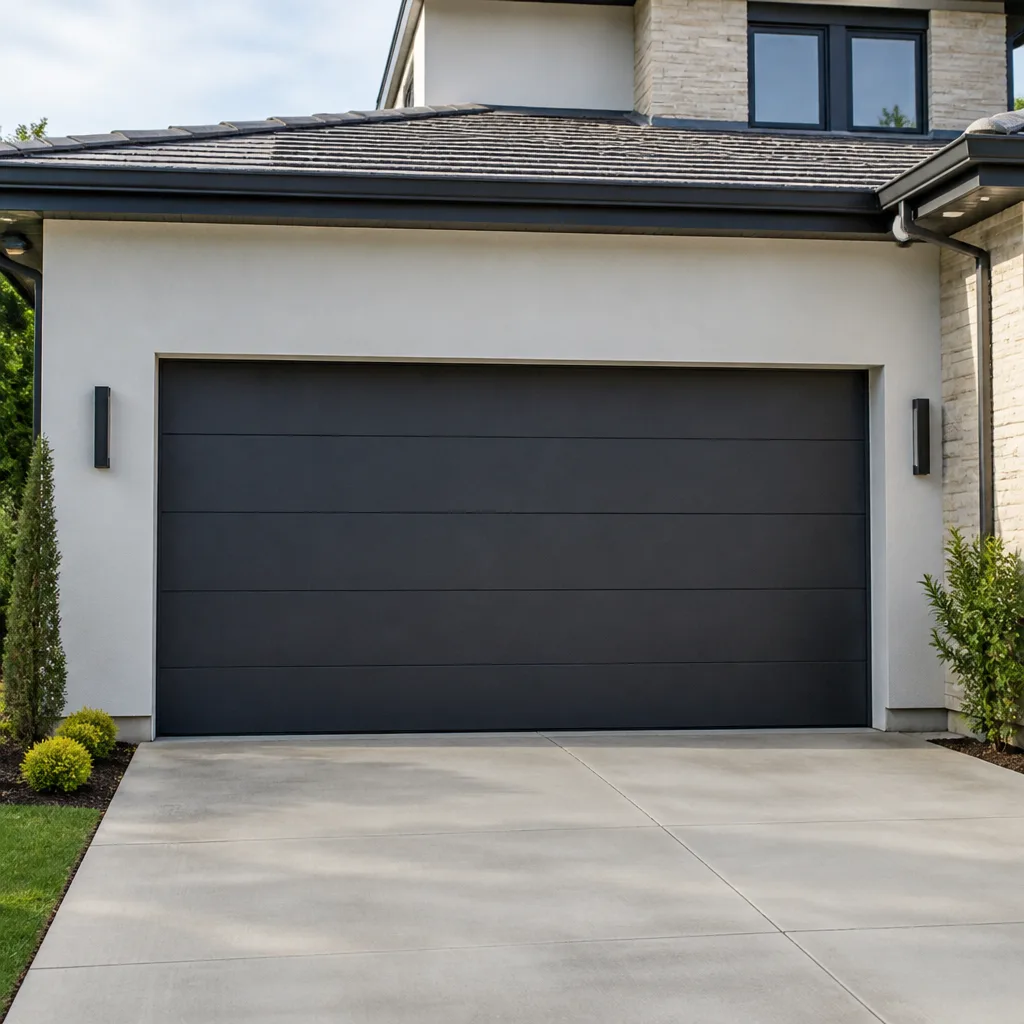 Modern flush
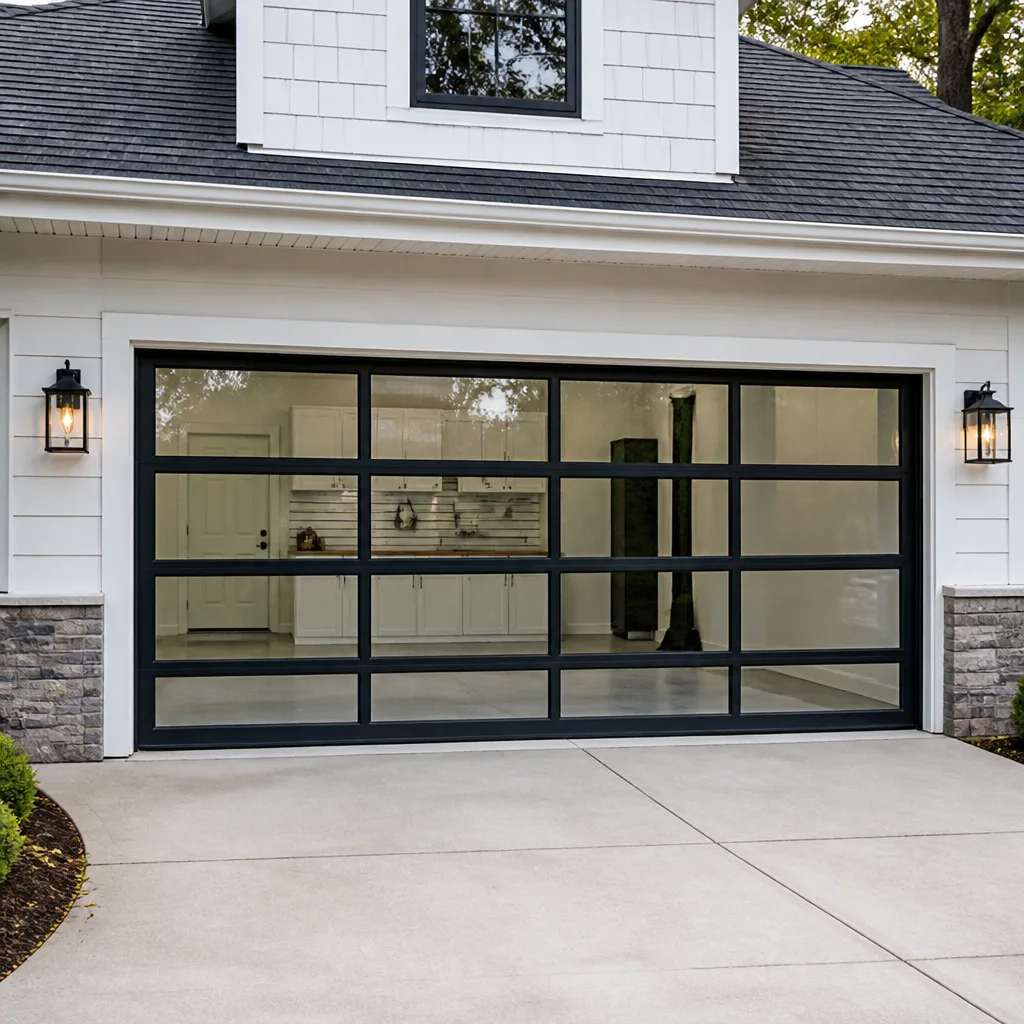 Full-view glass
 LiftMaster openers
 Chamberlain openers
Full 25-point door and opener safety check with every visit - springs, cables, rollers, tracks, and your LiftMaster or Chamberlain opener included
You get a price before we start. It does not change when the truck arrives.
Get your free estimateSeasonal Garage Door Care for Cathedral City: Year-Round Homeowner’s Guide
The week most Cathedral City garage doors fail isn’t midsummer. It’s the first 100-degree day in May or June, after the door has been sitting relatively idle through a mild winter. The spring-and-bearing stress that built up quietly all winter shows up fast when temperatures spike. This guide maps maintenance to Cathedral City’s actual climate calendar, so you know exactly what to check, when to check it, and what’s normal versus what needs a call to a garage door specialist. For more guides & resources, see our blog.
Styles & brands we work with
- Raised-panel steel
- Carriage house
- Modern flush
- Full-view glass
- LiftMaster openers
- Chamberlain openers
Quick Answer
Seasonal garage door maintenance in Cathedral City means following four climate-driven windows: pre-summer tension and seal checks (March to April), heat-aware operation and lubrication (June to September), post-summer UV and seal inspection (October to November), and cold-desert-night adjustments (December to February). See The Complete Garage Door Repair Guide for Cathedral City Homeowners for a broader overview. Most failures happen when homeowners skip the spring inspection and let winter-hardened components hit triple-digit temperatures without adjustment.
Table of Contents
- Pre-Summer Prep: March to April
- Summer Operation: June to September
- Fall Transition: October to November
- Winter Considerations: December to February
- Santa Ana Wind Season Prep
- The Right Way to Lubricate a Garage Door in Cathedral City
- Monthly Checklist for Cathedral City Homeowners
- Common Mistakes to Avoid
- When to Call a Professional
- Frequently Asked Questions
- The Bottom Line
Pre-Summer Prep: March to April
By late March, daytime highs in Cathedral City are already brushing 90 degrees. Your garage door has spent roughly five months operating in mild conditions, and the springs, rollers, and hinges have settled into those cooler tolerances. When the first real heat wave arrives in May, metal expands, lubricant thins, and any component that was marginal in February becomes a failure waiting to happen.
March and April are the months to run through a deliberate pre-summer inspection. Here’s what to check, in order, drawn from our Complete Garage Door Repair Guide for Cathedral City Homeowners:
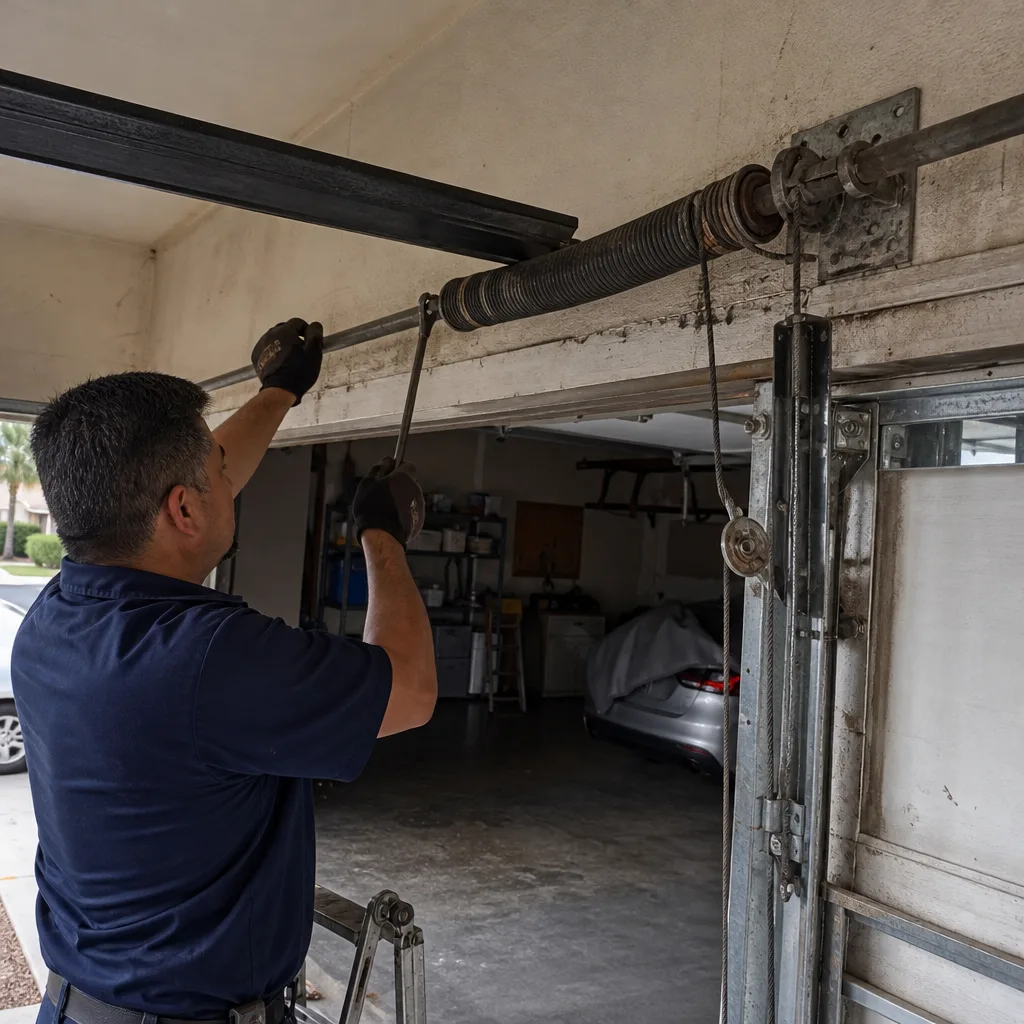
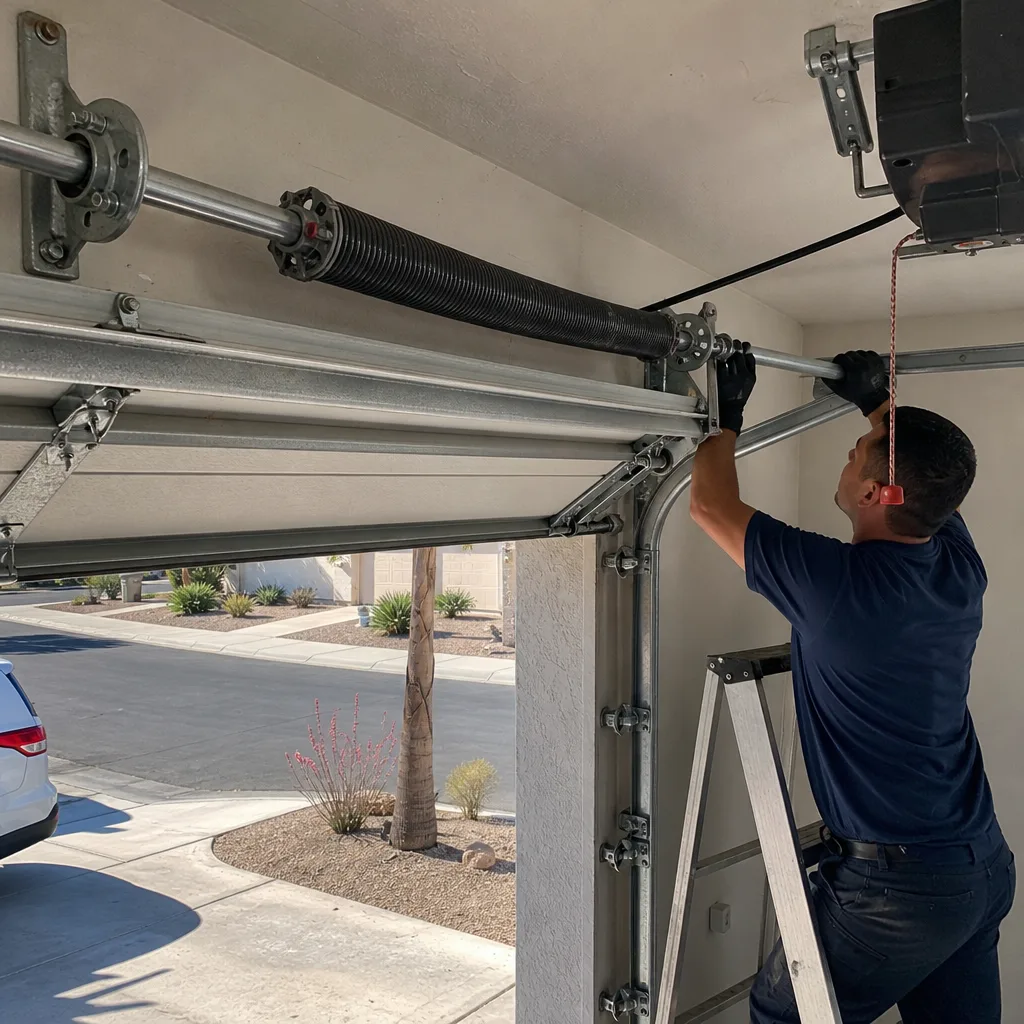
- Spring tension. Torsion springs lose tension gradually, and a door that’s been slightly out of balance since January will get worse in the heat. Disconnect the opener and lift the door manually. It should rise to waist height and stay there without drifting more than a few inches. If it drops, the springs need professional adjustment.
- Bottom seal condition. The rubber seal along the bottom of the door is your main defense against dusty desert air, scorpions, and summer heat intrusion. Look for cracks, flattening, or gaps where the seal meets the concrete. Cathedral City’s dry air accelerates rubber embrittlement faster than most homeowners expect.
- Roller wear. Nylon rollers are common on newer doors, and they can chip or develop flat spots. Steel rollers rust even in a dry climate, especially if your garage gets occasional wash-downs or condensation. Spin each roller and listen for grinding or wobble.
- Track alignment. With the door closed, run your hand along the vertical tracks. They should be parallel and securely bolted. Even a slight bow can cause the door to bind once metal expands in June.
- Opener force settings. Test the auto-reverse by placing a 2×4 flat on the floor under the door’s path. The door should reverse within two seconds of contact. If it doesn’t, the force setting is too high, and that’s a safety issue, not just a maintenance issue.
If you’re not comfortable checking spring tension yourself, that’s reasonable. High-tension torsion springs are under hundreds of pounds of force, and the cables that run alongside them can cause severe injury if mishandled. We recommend a professional inspection if you hear a loud bang from the spring area, see a visible gap in the spring coil, or notice the door feels much heavier than it used to. Garage door repair in Cathedral City is something we handle year-round, but catching a spring issue before it snaps saves you an emergency call in July.
Summer Operation: June to September
By June, Cathedral City is regularly hitting 110+ degrees. Your garage door system is now operating at the edge of its design temperature range. That’s not a flaw, just physics. Heat affects three things most: spring steel, opener electronics, and rubber components.
Springs and heat. Torsion springs are rated for a specific number of cycles, and heat accelerates fatigue in marginal springs. A spring that was fine at 80 degrees may snap at 115 degrees, particularly if it has more than 10,000 cycles on it. We’ve replaced springs in Cathedral City that snapped during a late-afternoon cooldown, when the metal contracts rapidly after baking all day. That temperature cycle stress is real, and it’s why most spring failures around here happen between 5 and 8 PM in summer.
Opener motors and electronics. Opener logic boards and capacitor motors dislike sustained heat. If your garage isn’t ventilated, interior temperatures can push 140 degrees on a July afternoon. That shortens the life of a Chamberlain or LiftMaster opener meaningfully. You’ll know heat is affecting the opener if it runs fine in the morning but struggles or stops mid-cycle in the afternoon. That’s the thermal overload protection kicking in, and it’s a warning sign, not something to keep resetting.
Weatherstripping and seals. In June through September, the bottom seal takes a beating. Direct sun on the lower panel heats the seal, and repeated compression into hot concrete flattens it. Check the seal each month during summer. Replacement is inexpensive and you can do it yourself, but the door needs to be lifted safely first.
What’s normal in summer:
- A slightly slower door during peak afternoon heat, recovering by evening
- Expansion noises (creaks, ticks) from the tracks as they warm and cool
- Grease appearing thinner and weeping slightly from hinges, especially on older doors
- Opener lights flickering when the capacitor kicks in during extreme heat
What’s a warning sign:
- The door reverses on its own mid-cycle, especially on the way down
- Visible sag or gap in the torsion spring
- A door that struggles to lift only at a specific point in its travel
- Any scraping sound of metal-on-metal from the rollers or tracks
- An opener that trips its breaker repeatedly
We work on Genie, Chamberlain, LiftMaster, and the rest of the major brands. If your opener is struggling through a Cathedral City heat wave, garage door opener repair in Cathedral City during the summer months is something we schedule regularly. The most common fix we see is a bad capacitor or a misaligned safety sensor, both of which are quick repairs when caught early.
Fall Transition: October to November
Fall in Cathedral City is what passes for a breather. Temperatures drop back to the 80s and 90s, and suddenly the garage door behaves again. That’s the trap. The damage from three months of extreme heat doesn’t always show up during the heat itself. It shows up when the components cool, contract, and reveal the cracks and wear that summer created.
The October-November window is for a post-heat-season inspection. Focus on these areas:
- Panel UV damage. Three summer months of intense desert sun degrades the paint and finish on steel and aluminum panels. Look for fading, chalking, or small surface cracks along the top of each panel. This is cosmetic today, but UV exposure eventually breaks down the primer layer, and surface rust follows on steel doors.
- Seal degradation from ozone. The Coachella Valley has consistently high ozone levels, especially in fall. Ozone attacks rubber, and your bottom seal, side seals, and top seal all degrade faster here than in coastal California. If the seal is cracking or feels hard instead of pliable, it’s time. A seal replacement in October means you’ll be ready for winter and the following spring.
- Hinge and bracket tightness. Summer expansion and contraction works bolts loose over time. Check every hinge, bracket, and track bolt with a wrench. A loose hinge bolt causes uneven wear on the rollers, which eventually causes the door to run rough and grind at the opener.
- Opener gear inspection. The drive gear in a Chamberlain or LiftMaster chain-drive opener is a common wear item after a hot summer. If your opener makes a grinding or clicking noise during the open cycle, the drive gear is likely stripped or close to it. That’s a repair best handled by someone who’s seen the failure pattern before.
Fall is also the time to think about upgrading if your door took visible damage over the summer. Amarr and Wayne Dalton both make steel doors with thicker insulation cores and better UV-resistant finishes than what was installed on many 1990s-era Cathedral City homes. If you’re weighing repair versus replacement, garage door installation in Cathedral City can be sized, quoted, and scheduled without rush this time of year.
Winter Considerations: December to February
Cathedral City winters are mild by any national standard. Daytime highs in the 70s, abundant sunshine. But the desert cold snaps are real, and they do things to a garage door that surprise people who just moved here from colder climates.
The pattern that matters is the overnight low. Between December and February, nighttime temperatures in Cathedral City regularly dip into the 40s, and on a cold-desert night they can touch the high 30s, especially in the northern stretches of the city toward the foothills. A 35-degree swing between 3 PM and 3 AM is common, and that daily thermal cycle is what stresses the door system, not the absolute temperature.
What cold desert nights do to your door:
- Spring tension increases at low temperature. Cold metal contracts, and a torsion spring is slightly stiffer at 40 degrees than at 90 degrees. A door that’s already borderline in balance will be noticeably harder to open on a cold morning, then feel fine by noon. If you notice this pattern, the springs were marginal before winter, and they need professional attention before spring heat arrives.
- Lubricant thickens. If you’re using a standard garage door lubricant, cold morning viscosity is higher. The door may be slightly more sluggish on the first open of the day. Use a silicone or lithium-based lubricant designed for a wide temperature range, and only apply it to hinges, rollers, and springs, never the tracks.
- Opener logic boards are more sensitive to cold-weather voltage drops. If you get a power fluctuation on a cold night, some openers will trip their safety lockout and require a manual reset. This isn’t usually a fault in the opener; it’s a cold-soak sensitivity that affects older Craftsman and Raynor units more than newer models.
- Thermal bowing in sectional doors. A sectional steel door facing direct morning sun after a cold night will bow slightly outward in the center. This is normal and resolves as the panels equalize. What’s not normal is a persistent gap between panels when the door is closed, which means the panel hinges or end stiles are worn.
Doors in the Cove, Cathedral Canyon, and Rio Vista neighborhoods sit close to the hills and see slightly colder overnight temperatures than the lower bench areas near Date Palm Drive. The maintenance requirements aren’t dramatically different, but we do see more cold-snap spring snap incidents in the hill-adjacent communities, probably due to the bigger diurnal swing.
Santa Ana Wind Season Prep
Santa Ana winds in Cathedral City typically arrive between October and December, though spring wind events happen too. These are dry, gusty winds that come down through the San Gorgonio Pass and funnel through the Coachella Valley. Gusts in the 40 to 60 MPH range are common during major events, and garage doors take a load they don’t see at any other time of year.
The stress isn’t just pushing on the door panel. A wind load of 50 MPH against a 16-foot-wide double door applies hundreds of pounds of lateral force, and that force transfers through the panel into the hinges, brackets, and tracks. If any of those components are loose, worn, or misaligned, a Santa Ana event will find the weak point.
What to check before a high-wind event:
- Jamb brackets. These are the L-shaped brackets that hold the track to the wall framing. Walk the length of both vertical tracks and look for any bracket that’s pulled away from the wall or shows cracked paint around the screw holes. Loose jamb brackets during a wind event amplify door sway, which wears the rollers and hinges.
- Strut condition. Each horizontal panel on a sectional door should have a steel reinforcement strut, especially on a door that faces the prevailing wind. If the struts are bent, rusted through, or missing on the top panel, the panel will flex under wind load and can buckle. Struts on a 25-year-old door are often past their usable life.
- Center hinge stiffness. The center hinges on a double-wide door carry most of the wind-induced shear. Grab the door at the bottom edge and shake it laterally. If there’s more than an inch of travel, the center hinges are worn and need replacement before the next big wind day.
- Emergency release function. If a windstorm causes a power outage, you’ll want the manual release on the opener to work smoothly. Test it quarterly. The release cord should move freely, and the door should be liftable by hand when it’s pulled.
If you ride out a Santa Ana event with the door visibly shaking, rattling, or swaying in the tracks, that’s stress loading transmitted into every hinge and roller. It’s worth an inspection afterward, even if nothing broke. Wind damage often shows up as accelerated wear three or six months later.
The Right Way to Lubricate a Garage Door in Cathedral City
Our dry climate works in your favor here. You won’t fight the rust and corrosion that a coastal garage door collects, but the tradeoff is that dust and fine desert grit stick to old lubricant and form an abrasive paste. More lubrication isn’t better. Correct lubrication, on the correct schedule, is what matters.
What to use
- Silicone spray or white lithium grease for hinges, springs, and roller bearings. Silicone spray is easier for most homeowners to apply cleanly. Lithium grease lasts longer.
- Never use WD-40 as a lubricant on door components. It’s a solvent and water displacer, and it strips the protective layer off the metal. It actively shortens component life.
- Never apply any lubricant to the tracks. The rollers are supposed to roll on the track, not slide. Greased tracks collect dust and grit and accelerate roller wear.
Schedule for Cathedral City
- March: Full lubrication of hinges, roller bearings, springs, and the opener chain or screw drive. This preps the system for maximum summer duty.
- June: Light touch-up on the torsion spring coil points if the spring sounds dry or squeaky.
- September: Post-summer wipe-down of old lubricant that’s collected dust, then a fresh light application. This removes the abrasive paste before it works into the hinge pins.
- December: Light lubrication of the opener drive mechanism only. Door components need less attention in winter.
Every hinge and roller on a double door takes about ten minutes to lubricate once you know where the pivot points are. The torsion spring should get a thin, even coat along the full coil length, not a glob at each end. We see a lot of doors in Cathedral City where past lubrication was applied to the wrong parts and left the right parts dry. The door gums up or grinds, and the homeowner assumes the door is failing when it’s actually just badly maintained.
Monthly Checklist for Cathedral City Homeowners
Ten minutes once a month catches 90 percent of the failures we see on service calls. Here’s the list we walk our own customers through:
- Disconnect and test the balance. Open the door halfway by hand. If it holds position, the springs are balanced. If it drifts down, the springs are weakening. If it drifts up, the springs are overtensioned. Both conditions need adjustment.
- Check the auto-reverse. Use a roll of paper towels or a small box placed in the door’s path. The door should reverse immediately on contact. Test both the downward and upward travel.
- Look at the cables. The lift cables on both sides should be taut and free of fraying. A cable with a single broken strand will fail under full load eventually, and the failure is sudden.
- Inspect the bottom seal. Close the door and look for daylight under the bottom edge. If you can see light, dust, insects, and heat are getting in, and the seal needs replacement.
- Listen for any noise change. The door should run with a consistent low hum from the opener and a soft rattle from the rollers. A new squeak, grind, or popping sound is an early warning.
- Check the tracks for debris. The lower track sections collect sand, twigs, and the odd lizard. Clear anything that doesn’t belong, and check for any dents or bends in the track itself.
Common Mistakes to Avoid
- Skipping the spring inspection because winter was mild. Cathedral City’s climate keeps doors functional through winter, so the first heavy use coincides with the first heat wave. That’s the worst possible time to discover a weak spring.
- Greasing the tracks. We’ve covered this, but it bears repeating because it’s the single most common DIY mistake we see across Cathedral City. Greased tracks collect Coachella Valley dust and create a grinding paste that destroys rollers.
- Ignoring minor noise changes. A new squeak in March is a worn roller bearing. By July, that same roller can seize, flat-spot, and chew up the track. Small noise changes are early diagnostic signals, not personality quirks.
- Using the garage door as the only entry point during high-wind events. If a Santa Ana gust is blowing 50 MPH and the door is whipping in its tracks, every open-close cycle under that load adds wear. Use the front door during the worst hours.
- Forgetting the opener is part of the maintenance picture. We see owners who lubricate the door diligently and never think about the opener’s drive gear, chain tension, or travel limits. Your garage door is a system, door and opener together, and both halves need attention.
- Replacing only the broken component instead of looking at system age. A snapped spring on a 20-year-old Clopay or Wayne Dalton door is a signal. The door panels, hinges, and seals have the same age. Repairing the spring and ignoring the rest often means another failure within the year.
When to Call a Professional
Some garage door work is genuinely DIY-friendly: lubricating hinges, cleaning tracks, replacing a bottom seal. Some is not. Call a garage door professional for anything involving torsion springs, lift cables, or a door that has come off its tracks. High-tension springs store enough energy to cause severe injury or death if mishandled, and the cables they work with are under similar load. If your door shudders, drops, or bangs when cycling, don’t keep using it. We cover the full system, door and opener, so one call addresses the whole unit. Reliance Garage Door Service offers free estimates in Cathedral City. Call (833) 593-4550 and we’ll diagnose what’s actually wrong, not just the first thing we find.
Frequently Asked Questions
Lubricate the hinges, rollers, and springs three to four times per year, with the most important applications in March (pre-heat) and September (post-heat). Cathedral City’s dry, dusty air means old lubricant turns into an abrasive paste if left too long, so a light wipe-down before reapplication helps more than adding more lubricant on top of what’s there.
Yes. Cathedral City summers push garage interior temperatures above 130 degrees, which strains the opener’s capacitor, drive gear, and logic board. If your opener runs fine in the morning but struggles in the afternoon, that’s thermal overload doing its job. A professional can assess whether the opener needs repair or if your garage simply needs better ventilation.
Torsion springs are rated for a specific number of open-close cycles, and heat accelerates metal fatigue in a spring that’s already past its useful life. The rapid temperature drop in the evening, after a day of expansion in the sun, creates stress that can finish off a marginal spring. If one spring has snapped, the other is usually close behind, and most professionals recommend replacing both at once.
Yes, and significantly. Sustained gusts of 40 to 60 MPH push against the door panel and transfer that force into the hinges, brackets, and tracks. Loose jamb brackets or worn center hinges will amplify door sway and accelerate component wear, even if the door doesn’t visibly break during the storm.
Before summer is better. The bottom seal keeps dust, insects, and hot outside air out of the garage, and those are all summer problems in Cathedral City. If your seal is cracked, flattened, or letting in daylight at the bottom edge, replace it in March or April rather than waiting until August when the heat is already finding its way inside.
It depends on the door’s structural condition. If the panels are solid, the hinges are tight, and the door balances properly, maintenance is worth the time. If the door is sagging, panels are rusted through, or the balance is off and has been for a while, the money is usually better spent on a new installation. We’re brand-agnostic, so if you have an older Amarr, Raynor, or Craftsman door, we’ll give you an honest read on whether it’s worth keeping or ready for replacement. For help picking a new unit, see Choosing the Right Garage Door Brand: A Buyer’s Guide for Cathedral City.
The Bottom Line
Cathedral City doesn’t punish garage doors with snow and ice, but it has its own seasonal rhythm: a mild winter that hides spring fatigue, a brutal summer that exposes it, and wind events that find every weak bracket in the system. The maintenance calendar in this guide matches the climate you live in, not a generic national average. Check the springs in spring, watch the seals through summer, inspect for UV damage in fall, and respect what cold desert nights do to cold metal in winter. Ten minutes a month on the checklist is all it takes to keep the system running. Use this as your reference, and keep it on hand. And if you hit something that doesn’t look right, don’t guess at it. Call (833) 593-4550 and we’ll help you sort it out.
Written by the team at Reliance Garage Door Service, serving Cathedral City since 2016.
See the difference
 Before
 After
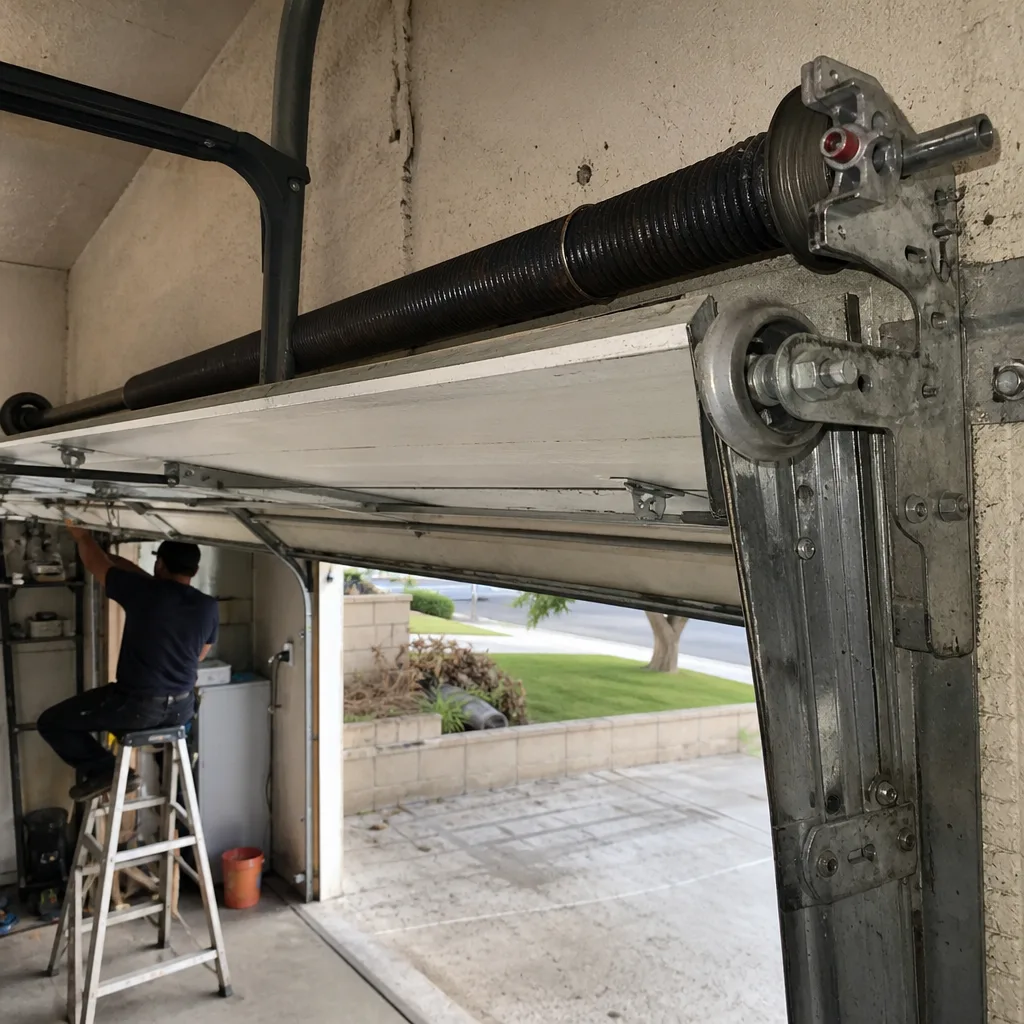 Before
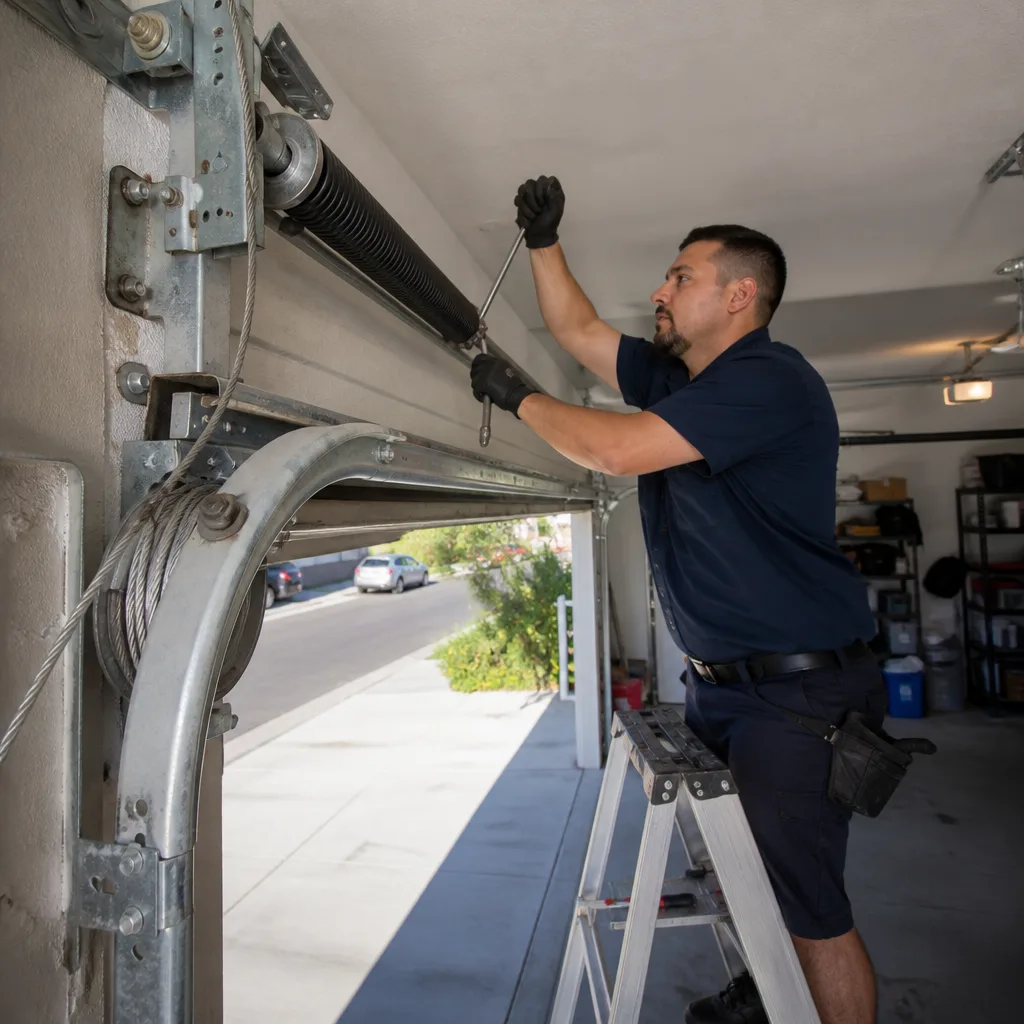 After
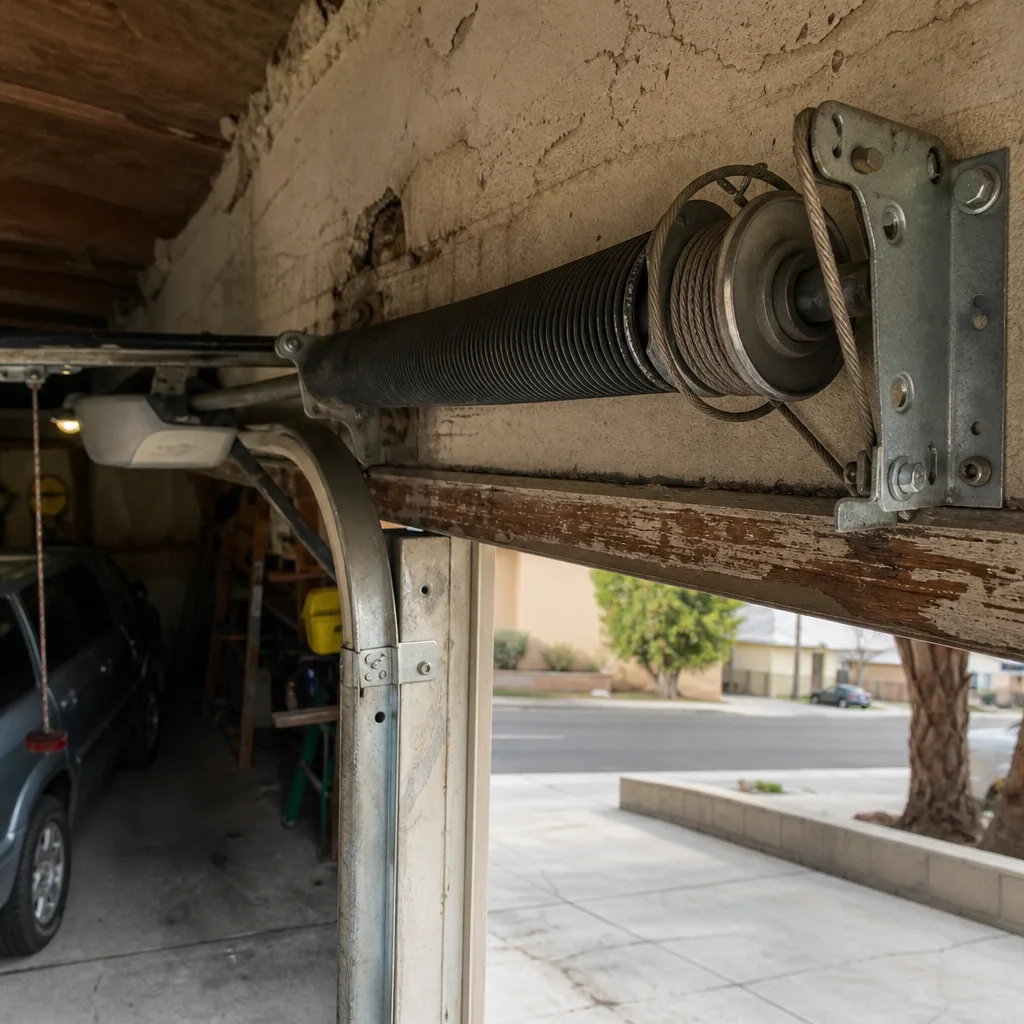 Before
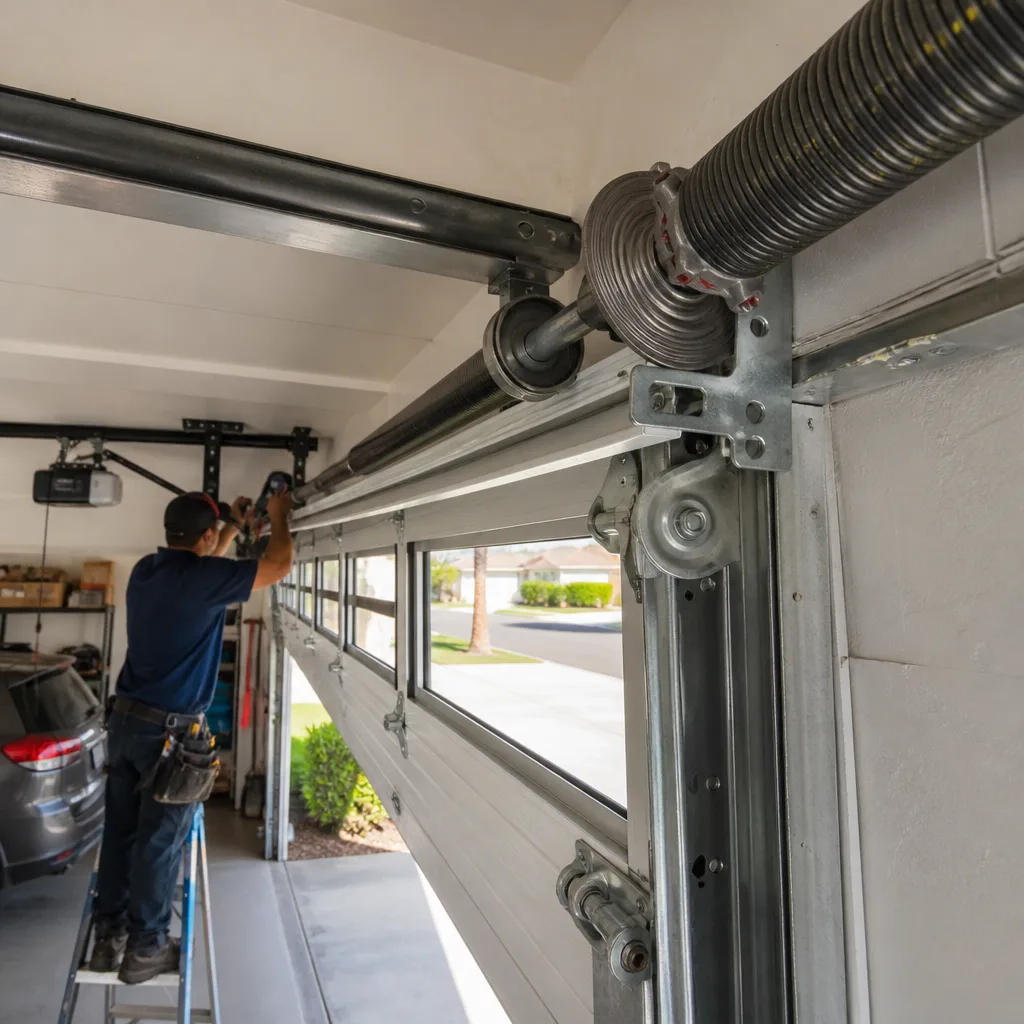 After