
Last updated November 3, 2026
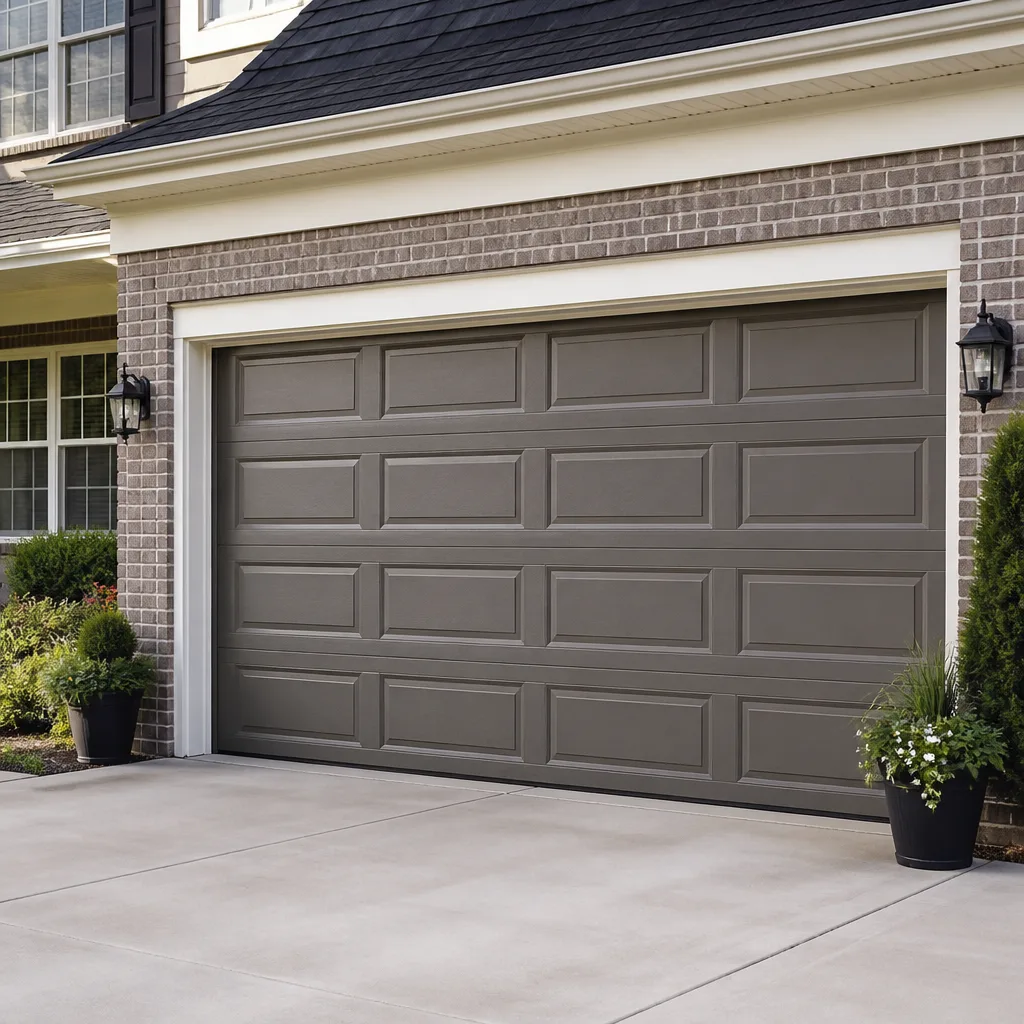 Raised-panel steel
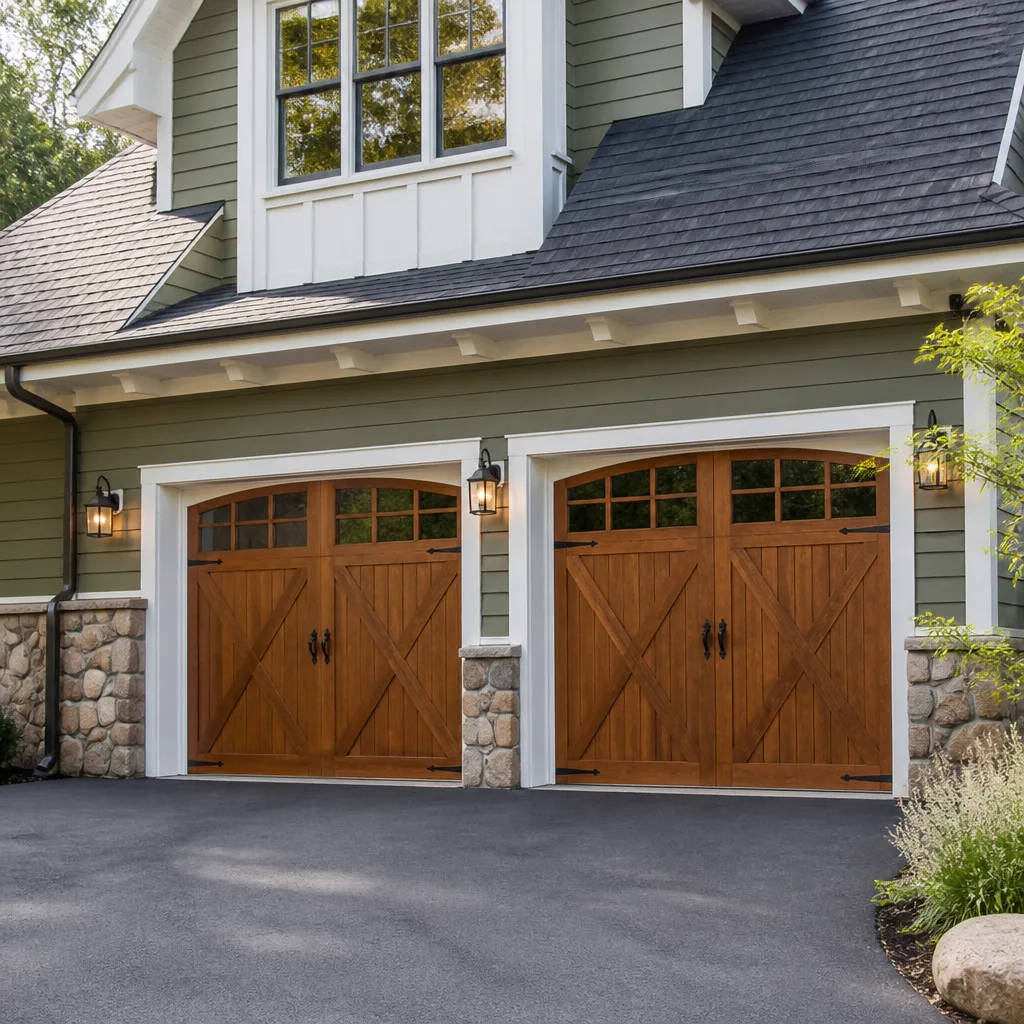 Carriage house
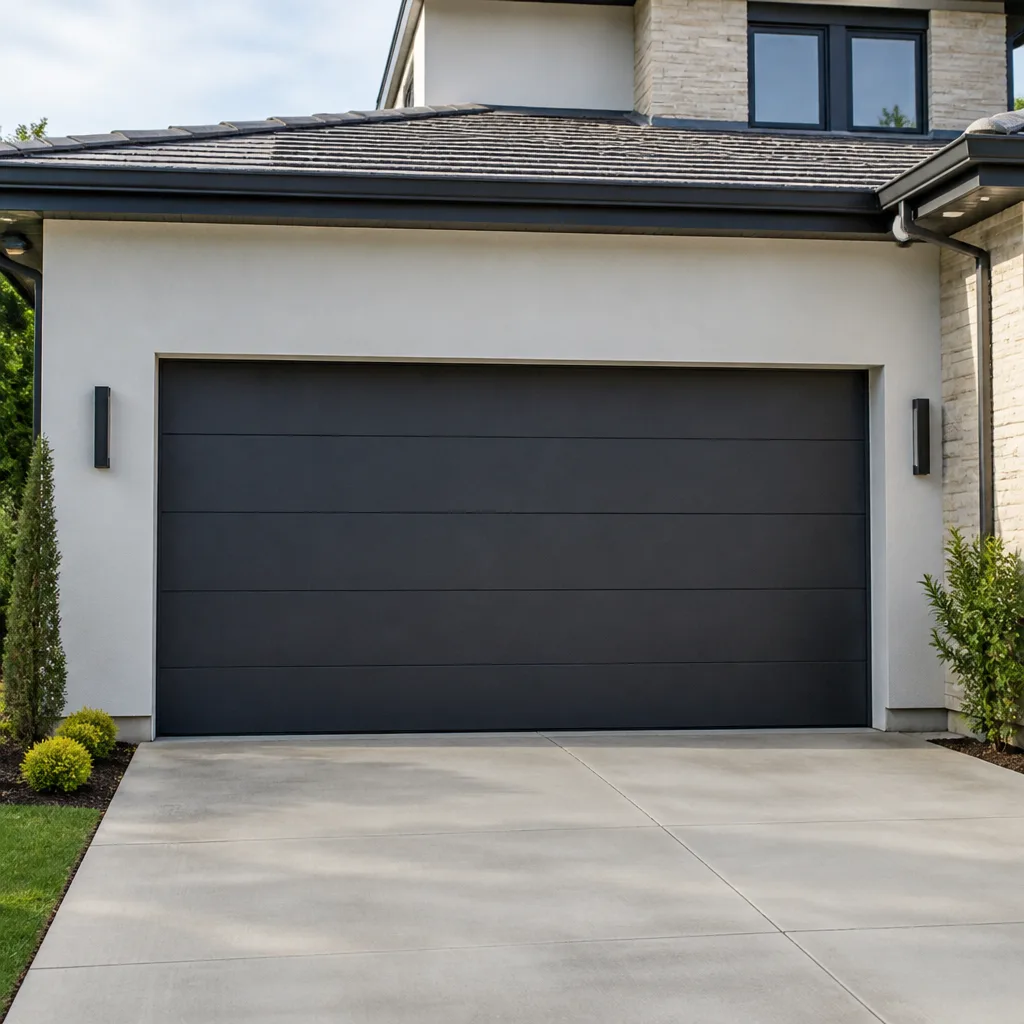 Modern flush
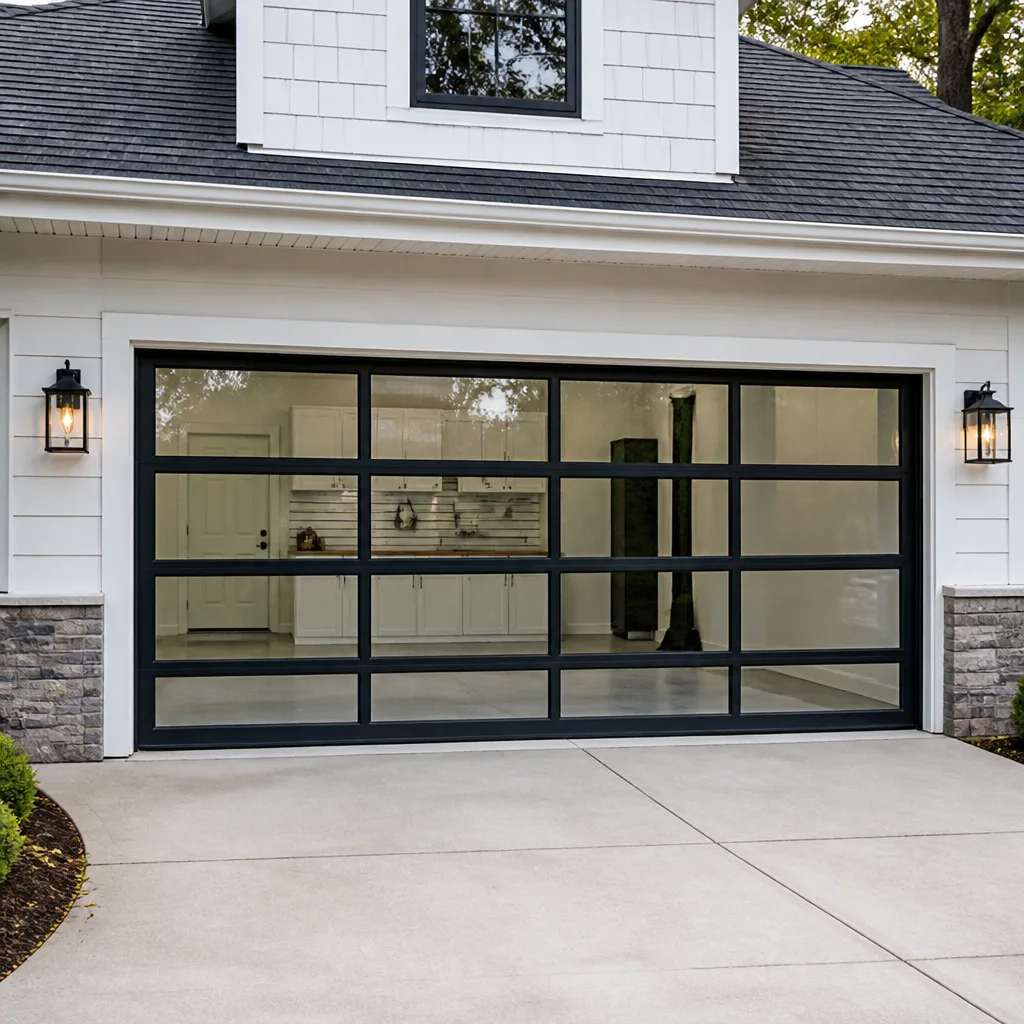 Full-view glass
 LiftMaster openers
 Chamberlain openers
Full 25-point door and opener safety check with every visit - springs, cables, rollers, tracks, and your LiftMaster or Chamberlain opener included
You get a price before we start. It does not change when the truck arrives.
Get your free estimateThe Complete Garage Door Repair Guide for Cathedral City Homeowners
Cathedral City regularly hits 115°F in summer, and that number matters more than most people realize. At that temperature, standard garage door lubricants thin out and metal torsion springs expand beyond their rated tolerance, which accelerates wear at roughly twice the rate you’d see in coastal cities like San Diego or even Riverside. The result: a garage door in Cathedral City tends to fail in predictable ways, at predictable times of year, for reasons that generic repair guides never address. This guide explains the desert-specific failure patterns we see in Cathedral City, what you can safely handle yourself, and what needs Garage Door Repair services from a trained professional.
Quick Answer
Garage door repair in Cathedral City, CA typically costs between $120 and $350 for spring replacement, $90 to $220 for cable repair, and $150 to $400 for opener circuit board or motor issues. Most repairs take one to two hours once parts are on hand, and the most common problems here are heat-stressed torsion springs, sand-contaminated tracks, and opener circuit boards that degrade faster in unconditioned garages. If your door makes a loud bang and won’t lift, that’s almost always a broken spring, and you should stop using the door immediately.
Styles & brands we work with
- Raised-panel steel
- Carriage house
- Modern flush
- Full-view glass
- LiftMaster openers
- Chamberlain openers
Quick Answer
For most Cathedral City homes, the leading garage door problems are broken torsion springs, misaligned photo-eye sensors, and opener remotes that lose signal in extreme heat. A reputable company can usually diagnose and repair these issues the same day, with most repairs running between $120 and $350 depending on the component and severity.
Here’s what we cover: the way the desert climate changes how your door fails, which repairs are safe to attempt, how to choose between a repair and a full replacement, the seasonal calendar you should live by, and the exact information to have on hand before you call for service. For more guides & resources, explore our blog. The more you know about your system, the better conversation you’ll have with whoever shows up.
Table of Contents
- How Cathedral City’s Desert Climate Changes Garage Door Failure
- The 6 Most Common Repairs in Cathedral City (and What They Cost)
- Torsion Springs: The Repair That Scares Every Homeowner
- Which Repairs Are DIY-Safe in the Desert (and Which Are Dangerous)
- Your Cathedral City Seasonal Garage Door Calendar
- Why the Brand on Your Opener Changes the Diagnosis
- How to Document a Problem for an Accurate Phone Estimate
- Repair vs. Replacement: A Cathedral City Cost Breakdown
- Common Mistakes to Avoid
- When to Call a Professional
- Frequently Asked Questions
- The Bottom Line
How Cathedral City’s Desert Climate Changes Garage Door Failure
Every garage door system, regardless of brand, is built from the same four components: the door itself, the torsion spring assembly, the cables and rollers, and the opener. In most of Southern California, these components age predictably based on number of cycles. In Cathedral City, that math goes out the window because the environment itself becomes a stress test.
The Coachella Valley heat cycle is the core problem. During summer, daytime ambient temperatures inside an unconditioned garage can sit above 120°F for hours. Metal panels expand. Lubricant thins. Then at night, temperatures drop 30 to 40 degrees, causing rapid contraction. This daily expansion-contraction cycle puts stress on every metal connection in the system. Over a single summer, a torsion spring in Cathedral City may experience more thermal stress than the same spring in Long Beach experiences in four years.
Lubricant failure is another desert-specific issue. Standard garage door lubricants are rated to around 100°F to 110°F before they begin to break down. When lubricant thins, it drips off hinges and rollers, leaving them running dry. Dry rollers on a metal track grind away at the track surface, causing uneven wear and eventual misalignment. We see doors in Cathedral City neighborhoods like Panorama and the Cove where the original rollers are completely flattened after just five or six years, solely because the lubrication failed in the heat.
Sand is the third factor. Cathedral City sits at the edge of the open desert, and any wind event stirs up fine particulates that find their way into every gap and seam on a garage door. This sand works itself into chain drives, buildup on photo-eye lenses, and creates friction in roller bearings. A door that works smoothly in Redlands or Beaumont will start grinding within a season or two here if the tracks aren’t periodically cleaned.
The 6 Most Common Repairs in Cathedral City (and What They Cost)
These are the six repairs we see most frequently in Cathedral City, listed in order of frequency. Prices reflect what homeowners typically pay here, though exact costs depend on door size, spring cycle rating, and accessibility.
| Repair Type | Typical Cost Range | Time on Site | Urgency Level |
|---|---|---|---|
| Torsion spring replacement (single) | $120 – $300 | 45 – 75 minutes | High – door won’t lift |
| Cable replacement (door off track or snapped) | $90 – $220 | 45 – 90 minutes | High – can cause door to drop |
| Roller replacement (set of 10) | $80 – $160 | 30 – 60 minutes | Medium (unless door shakes violently) |
| Opener circuit board replacement | $150 – $400 | 30 – 60 minutes | Medium – door may not open or close |
| Photo-eye sensor repair/realignment | $80 – $180 | 15 – 45 minutes | Medium – door usually refuses to close |
| Track alignment | $100 – $250 | 30 – 90 minutes | High – door may bind and jam |
These prices matter, but more important is response time. A door that won’t close is a security issue. A door that won’t open is a safety issue. In either case, waiting days for service isn’t realistic, which is why we’ve built our Garage Door Repair in Cathedral City service around responding quickly when doors fail. Most repairs are completed the same day or next morning, and the price is always quoted and agreed before any work starts.
Torsion Springs: The Repair That Scares Every Homeowner
If there’s one garage door component that Cathedral City homeowners have heard horror stories about, it’s the torsion spring. The spring sits above the door, mounted on a shaft, and stores the mechanical force needed to lift a door that weighs 150 to 400 pounds. The spring is wound tight during installation, and it holds that tension every single day of its life.
In Cathedral City, torsion springs tend to fail in one of two ways. The first is straightforward breakage: the metal fatigues from years of use plus the daily thermal expansion cycle, and the spring snaps. When a spring breaks, it sounds like a gunshot, and the door will not open. The second failure is more subtle: the spring loses its calibration over time, meaning it’s out of tension but hasn’t snapped yet. This shows up as a door that’s increasingly difficult to open manually, or an opener that sounds like it’s working too hard to lift the door.
Spring replacement is not a DIY job. The safety concern with torsion springs is real: a spring under tension stores enough energy to break bone or cause severe injury if it releases unexpectedly. That risk is amplified in Cathedral City because heat-stressed metal behaves differently than room-temperature metal; a spring that feels stable when cool may have internal fatigue cracks that aren’t visible. If your spring has broken or your door is suddenly difficult to lift, stop using it and call a professional. A trained installer will measure the old spring’s wire gauge and coil count to match the replacement exactly, ensuring the door balances properly.
Which Repairs Are DIY-Safe in the Desert (and Which Are Dangerous)
There’s a line between a weekend project and a trip to urgent care, and in Cathedral City that line moves a little further toward caution because of heat and sand. Read DIY vs Professional Garage Door: The Cathedral City Homeowner’s Decision Guide before deciding. Here’s the honest breakdown.
Safe to DIY
- Photo-eye sensor realignment. If the sensor lights are blinking and the door refuses to close, wipe the lenses with a dry cloth and gently adjust the aim until the lights turn solid. This is safe, quick, and fixes the issue more often than not.
- Track cleaning. Use a dry cloth or soft brush to remove sand and debris from the vertical and horizontal tracks. Do not use harsh chemicals on the tracks because they can eat the metal finish and create more friction later.
- Lubricating hinges and rollers. Use only a garage door-specific lubricant (not WD-40, which is a degreaser, not a lubricant). Apply to hinge points and roller bearings. Lube the spring lightly, but never touch it with your hands while it’s under tension.
- Remote battery replacement. If the door closes fine from the wall button but not from the remote, replace the remote battery before doing anything else.
- Weather seal replacement. The rubber sweep at the bottom of the door dries out rapidly in Cathedral City heat and needs replacing every two to four years. Replacement strips are sold at hardware stores and this is a low-skill job.
Do Not Attempt
- Torsion spring replacement or adjustment. The spring is under high tension and the risk of serious injury is too great for a casual attempt, even with online instructions.
- Cable repair. The lift cables work in tandem with the springs. If a cable has snapped or come off its drum, the remaining cable is under extreme load and can lash.
- Track removal or major realignment. The tracks support the full weight of the door. Loosening the wrong bracket when the door is open can cause the door to fall.
- Opener motor or circuit board replacement. Openers run on household current, and wiring mistakes can cause electrical shorts or fire hazards. This is especially risky in Cathedral City where hot garages can overheat adhesive and wire casing sooner than expected.
Our rule of thumb, after thousands of service visits across Cathedral City: if the part you’re thinking about touching stores mechanical energy or carries electrical current, call someone who does this work every day. The money you save on a DIY attempt rarely covers the cost of a full door or a hospital visit when something goes wrong. If you’re unsure, check our Reliance Garage Door Service home page for our contact information, and we’ll tell you honestly over the phone whether a repair needs a professional or is something you can handle.
Your Cathedral City Seasonal Garage Door Calendar
The timing of your garage door maintenance in Cathedral City can make a meaningful difference in how long components last and how many service calls you end up needing. Here’s the calendar we recommend.
February – March (Pre-Heat Inspection)
This is the most important inspection window in Cathedral City. Before the daily high crosses 95°F, schedule a professional inspection that covers spring tension, roller condition, cable integrity, and opener function. A pre-heat inspection catches worn components while the weather is still mild, allowing you to replace them on your schedule rather than during the first heat wave when every service company in the valley is slammed. In the Panorama and Rio Vista areas, we see a spike in demand every May and June when the heat forces failures to the surface; homeowners who inspect in March avoid that rush entirely.
May – June (Heat-Onset Watch)
The first sustained heat is when lubricant thinning and panel expansion begin in earnest. Check whether your door makes any new noises, sticks, or opens unevenly. If you notice any change in behavior, call for service immediately rather than waiting; heat-exposed components degrade quickly once they show symptoms, and a small roller issue in May is a door-off-track problem by August.
July – August (Peak Heat Monitoring)
During the hottest months, open your garage in the morning and run the door two or three times by hand (if you have a manual release) to test balance. If the door feels heavy or won’t stay mid-level, the springs are losing tension and should be inspected. Avoid using the opener as a crutch for a door that doesn’t balance properly; the extra strain on the motor and circuit board is how openers burn out in Cathedral City garages that sit at 110°F or more for hours each day.
September – October (Monsoon Recovery)
Monsoon season brings wind and fine sand, even in years when the rain is light. After the first few sand events, clean your tracks, inspect the photo-eye lenses for scratches that affect function, and test the door twice in a row: open, close, open. A door that hesitates on the second cycle often has heat-damaged rollers that need replacement.
November – January (Cool-Weather Catch-Up)
Winter is the best time in Cathedral City to handle bigger jobs like Garage Door Installation in Cathedral City or a full roller-and-track upgrade. Metal components are at their most stable in cooler weather, and a new door or new spring installed in January will be fully broken in before the heat returns. Plus, if you’re considering a new Clopay or Amarr door, winter ordering timelines align well with spring installation availability.
Why the Brand on Your Opener Changes the Diagnosis
A garage door that won’t open can look the same to a homeowner, but the underlying cause often depends on the opener brand hanging from the ceiling. This is where a company’s brand experience becomes genuinely useful, not just a marketing point.
Here’s a concrete example. A Chamberlain opener from the last ten years usually has built-in force-sensing that stops the motor if the door is struggling. If the door won’t close on a Chamberlain system, the cause is usually a real mechanical obstruction or a sensor problem, not the opener itself. The Chamberlain is just refusing to close because it’s measuring excessive force. If the same symptom happens on a Genie opener, the issue is more often a travel limit that needs recalibration or a circuit board that’s failing. A Genie that won’t close may need adjustment or even board replacement, while the Chamberlain may just need its track cleaned and photo-eyes aligned.
Knowing the brand on your call matters for diagnosis. We work across eight major brands: LiftMaster, Chamberlain, Genie, Clopay, Amarr, Wayne Dalton, Craftsman, and Raynor. That breadth means when a Cathedral City homeowner calls and says “I have a Wayne Dalton door that’s making a grinding noise,” we know exactly what to check on a Wayne Dalton system before we arrive. The same symptom on a Clopay door might point to a completely different component. If your service provider only installs one brand, they’ll always see that brand’s failure patterns. We know the brand you already have, and that speeds things up.
For opener-specific failures, see our Garage Door Opener Repair in Cathedral City page, which covers Chamberlain, LiftMaster, and Genie troubleshooting in detail.
How to Document a Problem for an Accurate Phone Estimate
When you call a garage door company in Cathedral City, the more precise you can be about the problem, the more accurate the estimate will be over the phone. Here’s what actually matters to the person on the other end.
Step 1: Identify the exact brand and model. Look for a sticker on the opener motor. There’s usually a model number printed on the side or on a small label. For the door itself, check for a manufacturer’s sticker on the inside panel or on the hinge. Knowing you have a Clopay door with a Chamberlain opener tells us the system’s exact components.
Step 2: Describe when the failure occurs. Does the door fail to open in the morning but works in the evening? Does it refuse to close when it’s hot but works when cool? Timing tells us a lot. Heat-related failures are predictable in Cathedral City, and the time-of-day pattern helps us identify whether the issue is thermal, mechanical, or electrical.
Step 3: Describe the sound precisely. “It makes a noise” doesn’t help. But “it makes a repetitive metal-on-metal grinding sound coming from the top of the door as it goes up,” does. If there was a loud bang and then the door stopped working, say so immediately: that’s a spring breakage.
Step 4: Note what still works. Does the motor hum but the door doesn’t move? Do the lights on the photo-eyes stay on? Does the wall button work but the remote doesn’t? These details are diagnostic gold.
Step 5: Send a photo or short video. A 10-second video of the door failing to open, emailed or texted, gives the service provider a clear picture of the problem before they even leave the shop.
The beauty of this approach: a good garage door company can usually diagnose a spring failure over the phone based on the “bang” sound and the door’s weight. With a brand-specific description, that diagnosis gets even sharper, which means the technician arrives with the right parts on the truck on the first visit.
Repair vs. Replacement: A Cathedral City Cost Breakdown
Every homeowner eventually faces the decision of whether to keep repairing an aging door or replace it entirely. For a deeper look at this choice, see The Complete Guide to Garage Door in Cathedral City. Here’s how we frame that decision in Cathedral City’s specific climate.
If your door is under 10 years old, repair is almost always the better path. Your panels, tracks, and hardware are still abundant in the supply chain, and a repair typically costs 10% to 25% of a full replacement. If your door is between 10 and 15 years old, the math gets more contextual: if the door is a well-maintained Amarr or Clopay model with no panel damage, a new spring and new rollers can extend its life substantially.
If your door is over 15 years old and has needed multiple repairs in a single year, replacement may be the better long-term investment. At that age, you’re likely looking at four-figure repair costs over the next three years versus a door that’s new, balanced, and optimized for today’s safety standards. Cathedral City’s heat also means that panels on an older door are more likely to have warped or delaminated, and individual panel replacement gets more expensive than a full door fairly quickly, especially on custom sizes or uncommon colors.
Here’s a quick comparison:
- Single spring replacement: $120 – $300 every 4 to 7 years, depending on cycle rating and heat stress.
- Full roller and cable replacement on an existing door: $160 – $380, and this restores smoothness for another decade.
- Full door replacement (basic steel): $800 – $1,600 installed, with premium materials running higher.
- Full door replacement (insulated Clopay or Amarr): $1,200 – $2,500 installed, depending on panel material and window inserts.
If you’re on the fence, a service call with a thorough inspection is the right next step. A competent technician will show you exactly which components are worn, what the repair would cost, and what a replacement would offer above and beyond the repair. The decision becomes much easier when the information is in front of you.
Common Mistakes to Avoid
- Ignoring a door that opens slowly. In Cathedral City, a sluggish door on a summer afternoon is often the first sign of a spring losing tension, not a lazy opener. If you let it go, the spring can snap when you least expect it, leaving your door stuck open or closed.
- Using WD-40 on hinges and rollers. WD-40 is a solvent, not a lubricant. It washes out the grease that was there and leaves the parts running dry. Use a proper garage door lubricant, and apply it sparingly.
- Closing the door on a snapped cable. When a cable snaps, the door may still move but it’s now lifting on one cable instead of two. Continuing to operate the door can pull the remaining cable off its drum and send the door off its tracks, which is a much more expensive repair.
- Replacing only one spring on a two-spring system. On most doors, the springs work as a pair. When one breaks, the other is close behind it. Replacing only the broken spring saves money now but guarantees a second service call soon.
- Painting the garage door tracks. Adding paint to a track can gum up the roller path and create friction. If you’re painting the door, mask off the track first.
- Scheduling repairs for peak afternoon heat. If your garage faces west in Cathedral City and sits at 125°F by 3 p.m., wait until morning or evening for service if you can. The technician will be more comfortable, and metal components behave more predictably when they’re not heat-expanded.
- Buying parts online without verifying compatibility. A spring advertised as “universal” is rarely universal. Torsion springs are matched to door weight and height, and a wrong-size spring is dangerous. If you’re buying hardware, bookmark the exact manufacturer part number from the sticker on your door or opener.
When to Call a Professional
Any time your garage door involves a broken spring, a snapped cable, a door off its tracks, or an opener that sparks or smells burnt, stop what you’re doing and call someone who’s trained on these systems. These are not situations where waiting or improvising helps. A door that’s half-open with a broken spring is under active tension and can fall.
Reliance Garage Door Service offers free estimates in Cathedral City. Call (833) 593-4550, explain what’s happening, and we’ll give you an honest assessment of whether the issue needs a same-day repair or can be handled on a scheduled visit. We work on the brand you already have, and we don’t push replacements when a repair makes sense.
Frequently Asked Questions
Most garage door repairs in Cathedral City run between $90 and $400, depending on the specific component. A single torsion spring replacement typically costs $120 to $300, while a new opener circuit board runs $150 to $400. The exact price is always quoted and agreed before work starts. Call (833) 593-4550 for a free estimate based on your door and opener details.
Cathedral City’s daily temperature swings from 120°F to 80°F cause rapid expansion and contraction of metal components, which fatigues springs faster and thins lubricant sooner. Sand from the desert floor creates additional friction in tracks and hinges. This combined effect cuts the lifespan of torsion springs and rollers by 30% to 50% compared to coastal climates.
No. Torsion springs are under high mechanical tension, and a spring that releases during a DIY attempt can cause severe injury or death. In Cathedral City, heat-stressed springs are even more unpredictable than usual. Spring replacement is a professional-only repair, and the cost is far lower than the risk of attempting it yourself.
Yes. We’re trained across eight major brands including LiftMaster, Chamberlain, Genie, Clopay, Amarr, Wayne Dalton, Craftsman, and Raynor. We repair the system you already have rather than steering you toward a single manufacturer, and our technicians arrive with brand-specific parts on the truck.
In most cases, yes. We keep our Cathedral City service area response times tight and prioritize doors that won’t close (security risk) or won’t open (safety risk). Call (833) 593-4550 and describe the problem, and we’ll tell you exactly when we can be there.
No. We quote a price before work starts and stick to it. If we discover additional damage during the repair, we stop, explain what we found, and get your approval before doing anything beyond the original scope. You’ll never get an invoice bigger than the number you agreed to.
The Bottom Line
Garage door repair in Cathedral City is shaped by the desert: extreme heat, rapid temperature swings, and blowing sand combine to stress springs, lubricant, and electrical components faster than anywhere else in Southern California. The homes here need a repair partner who understands these conditions and can diagnose a problem based on how Cathedral City’s climate behaves, not just a generic manual. That means pre-heat inspections every spring, quick action when doors misbehave in summer, and a service provider who knows the brand on your door and can solve it without guesswork. Reliance Garage Door Service was built for exactly this. Call (833) 593-4550 any time for a free estimate, and we’ll get your door back to working order with clear pricing and no surprises.
Written by the team at Reliance Garage Door Service, serving Cathedral City since 2016.
See the difference
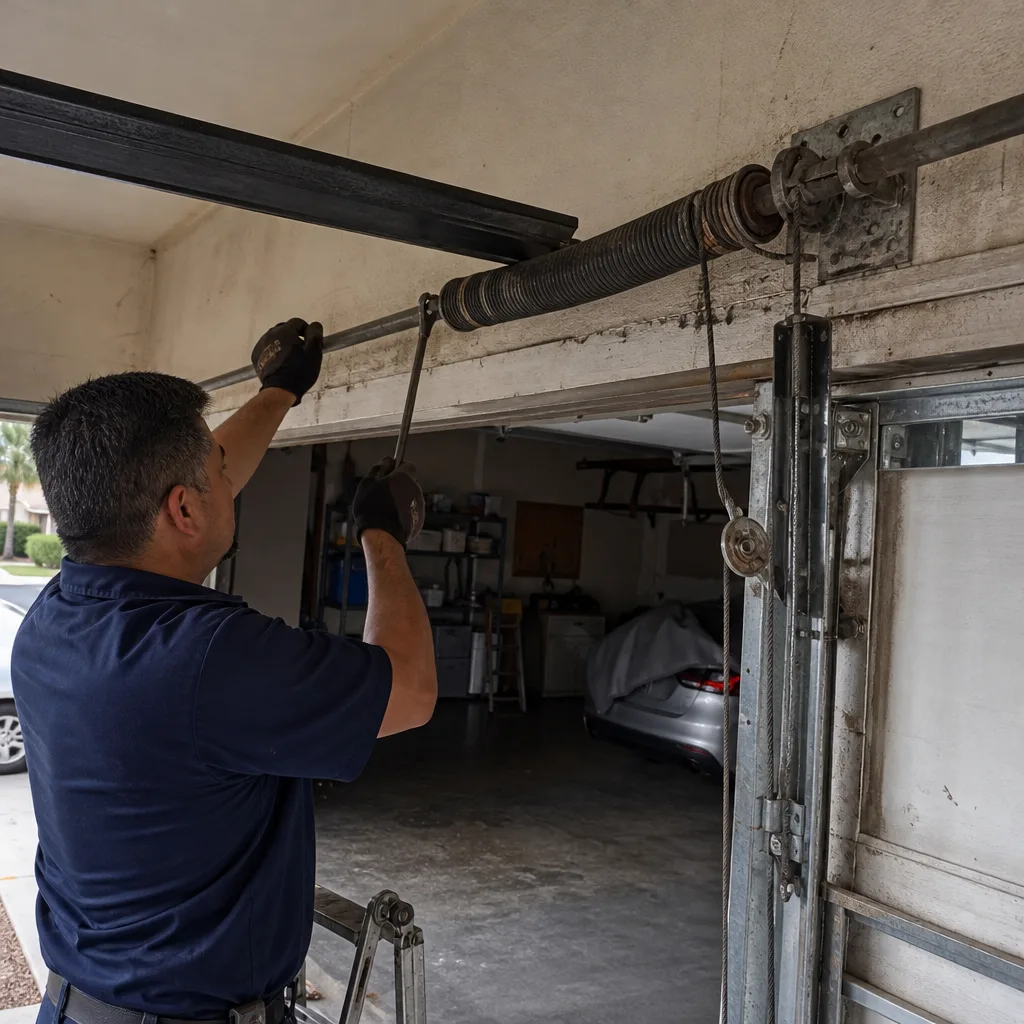 Before
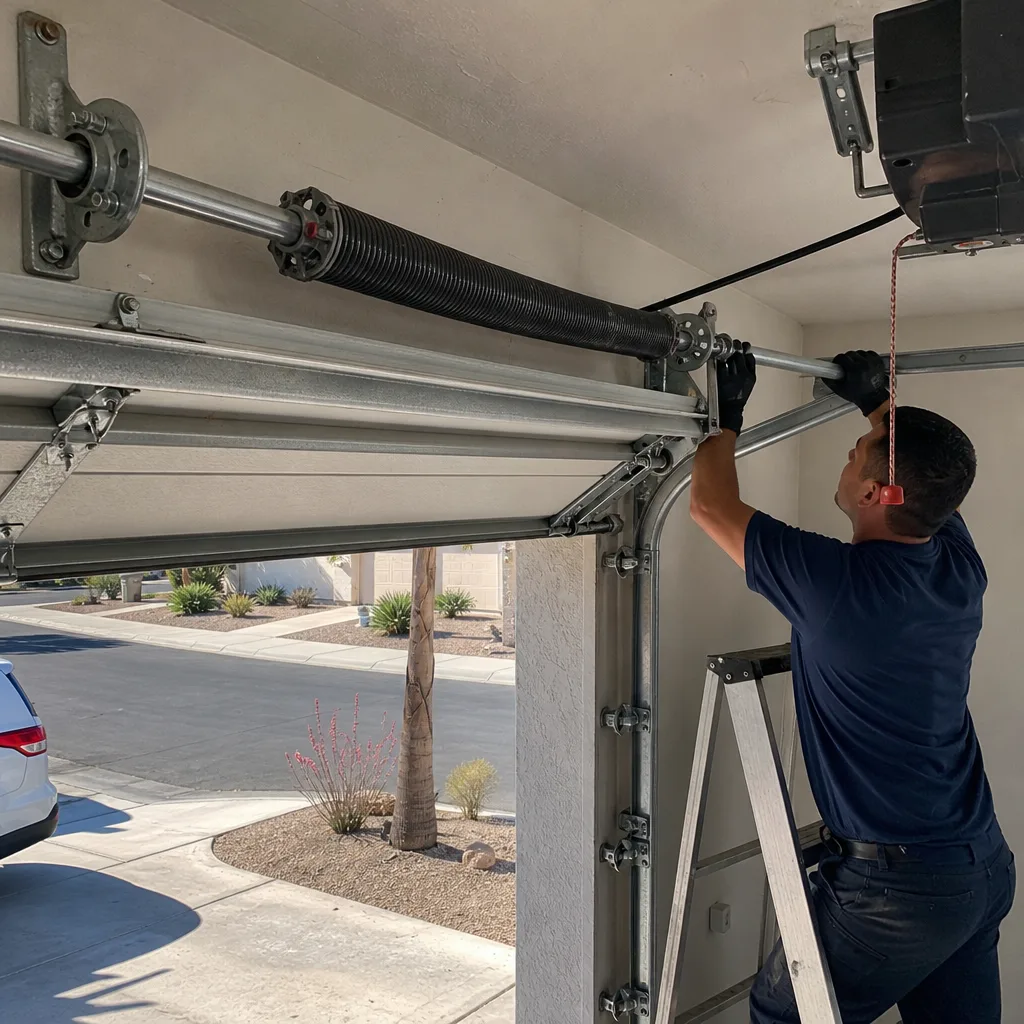 After
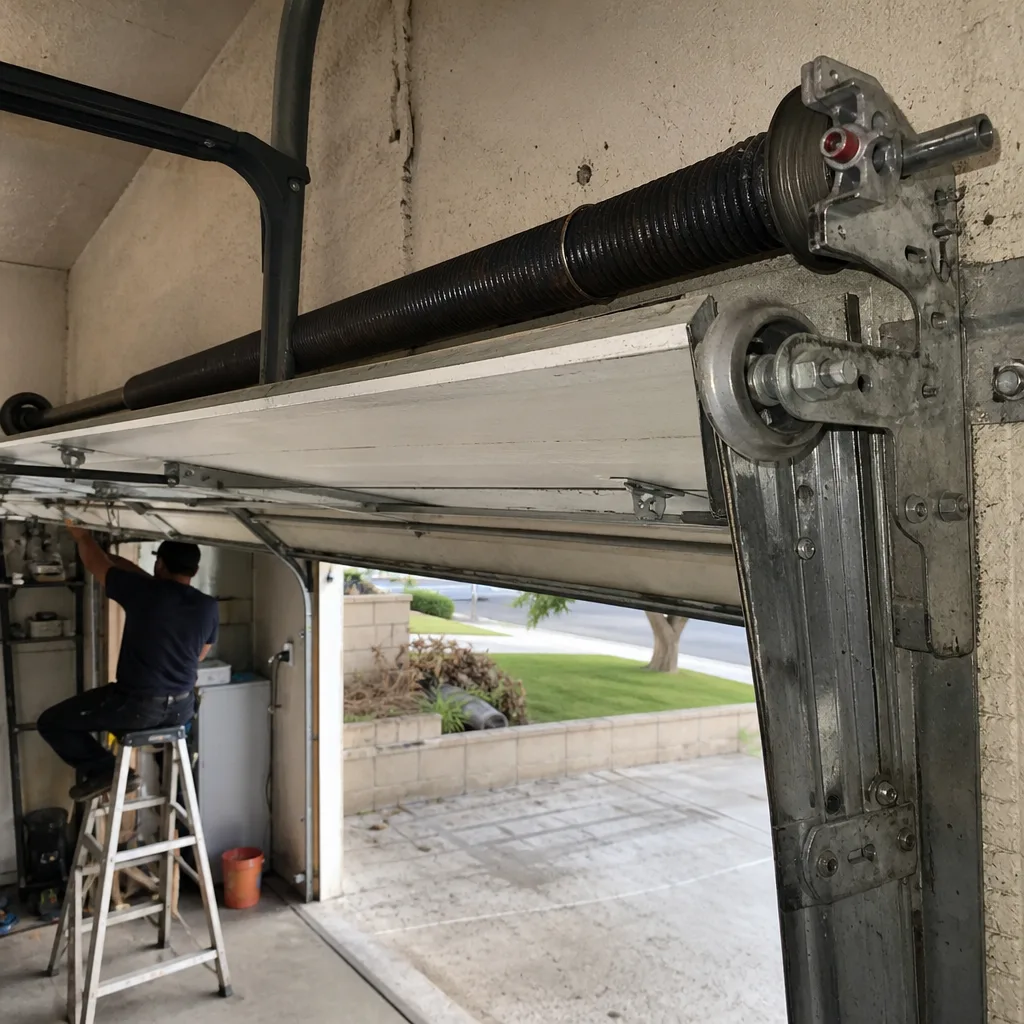 Before
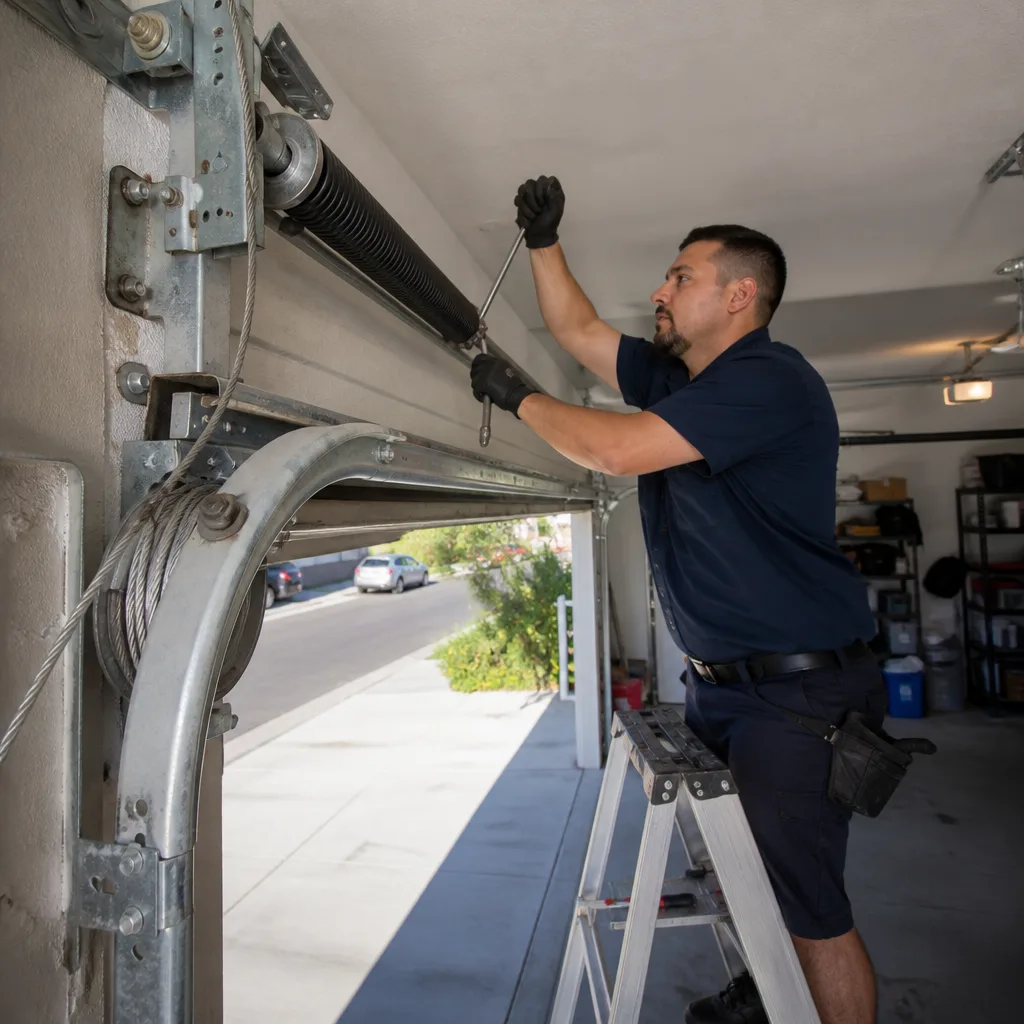 After
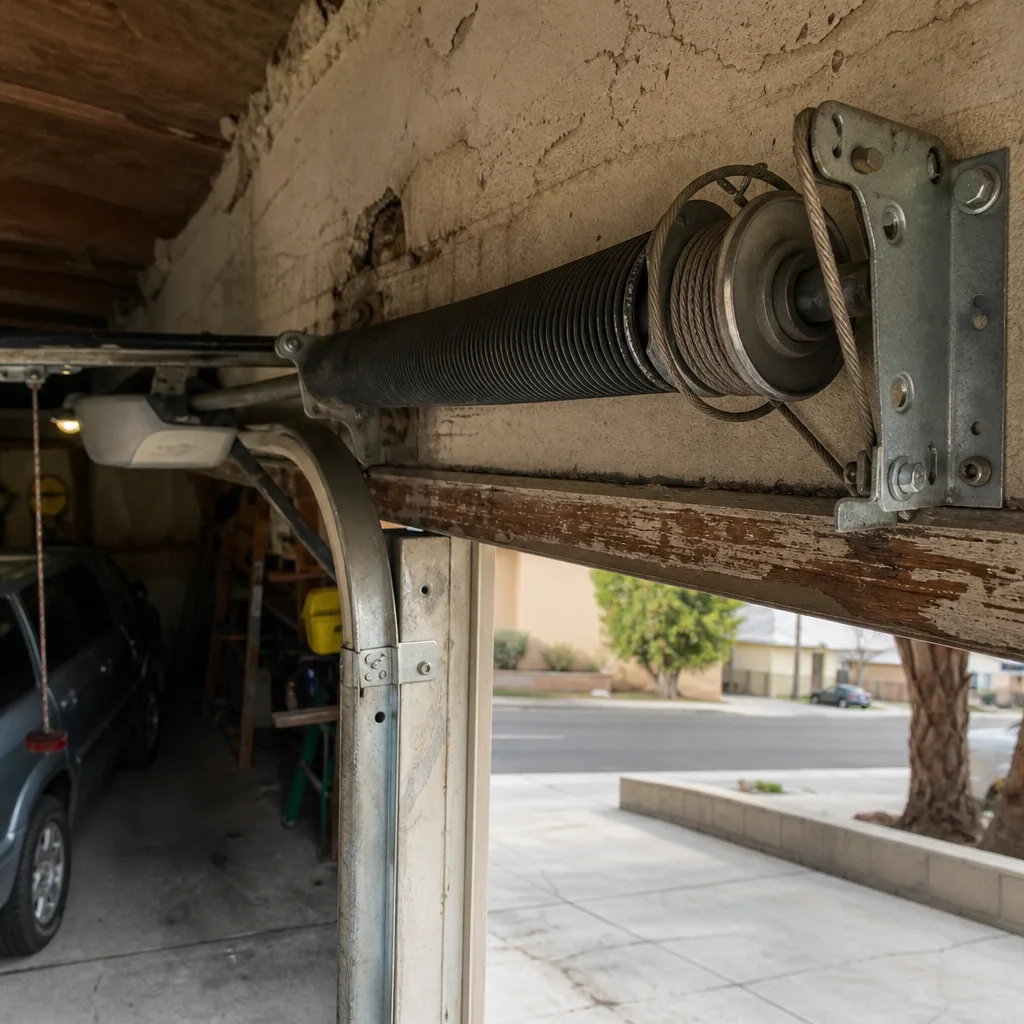 Before
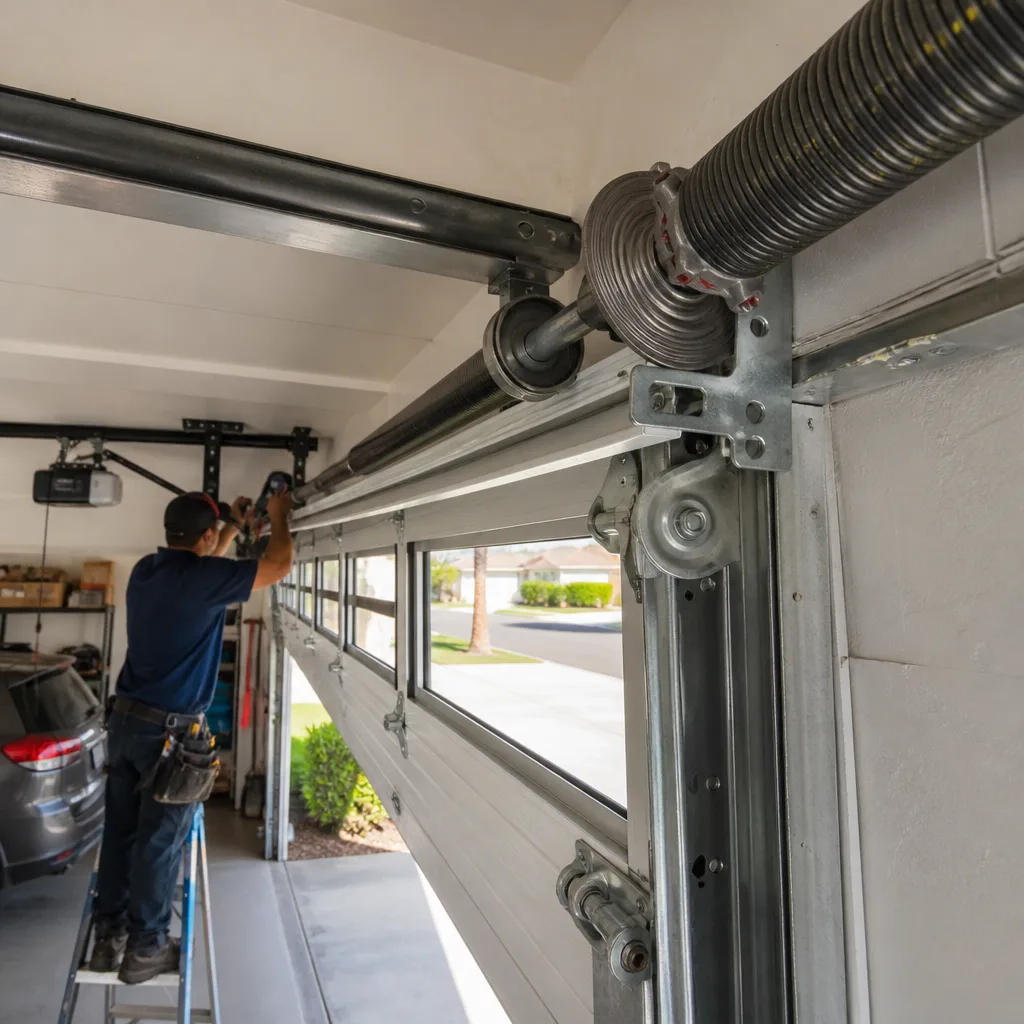 After