
Last updated November 2, 2026
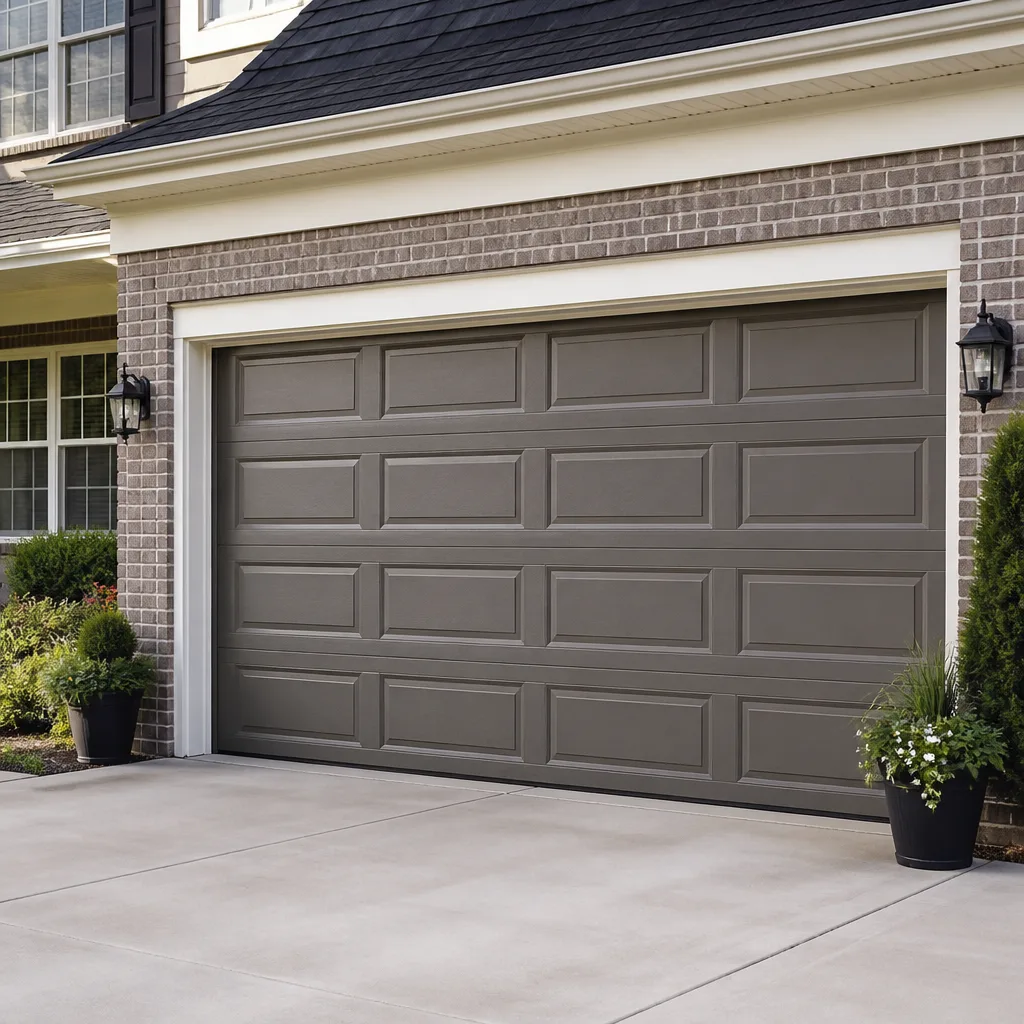 Raised-panel steel
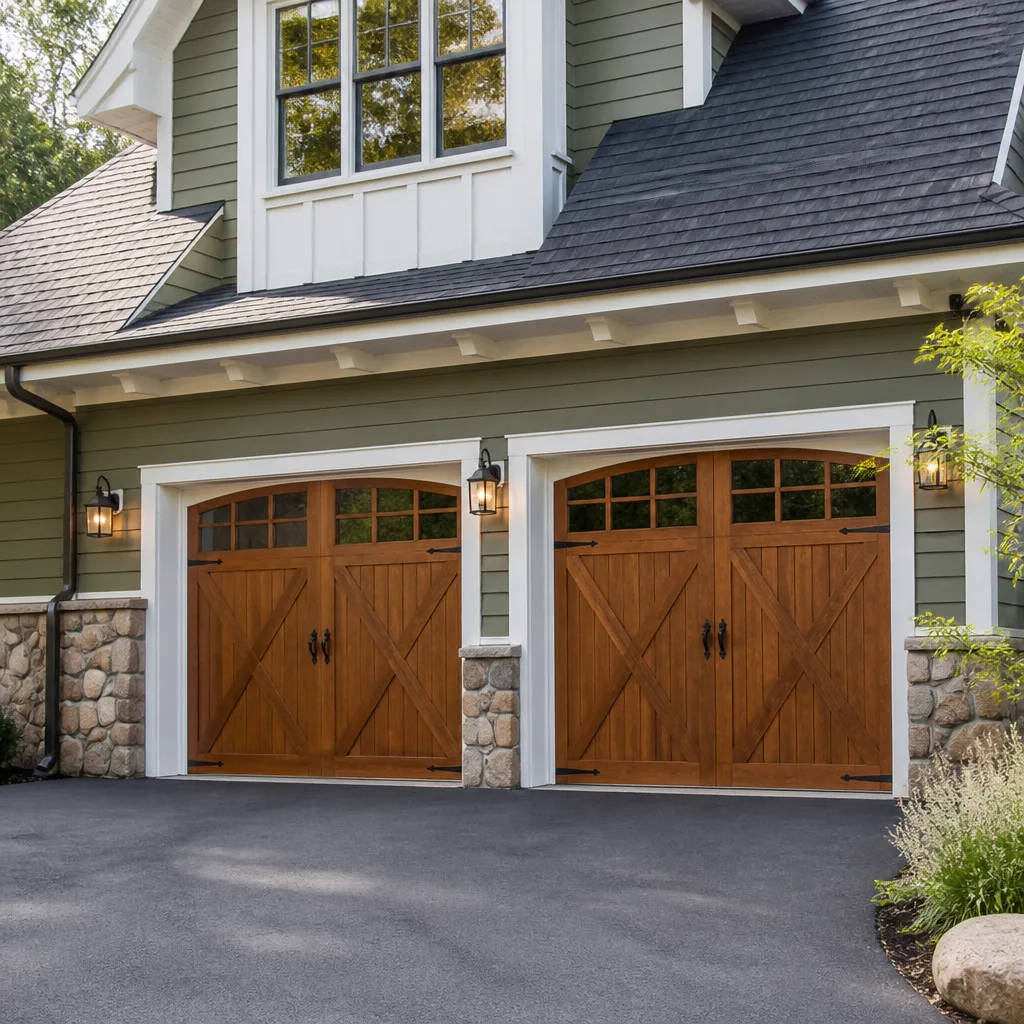 Carriage house
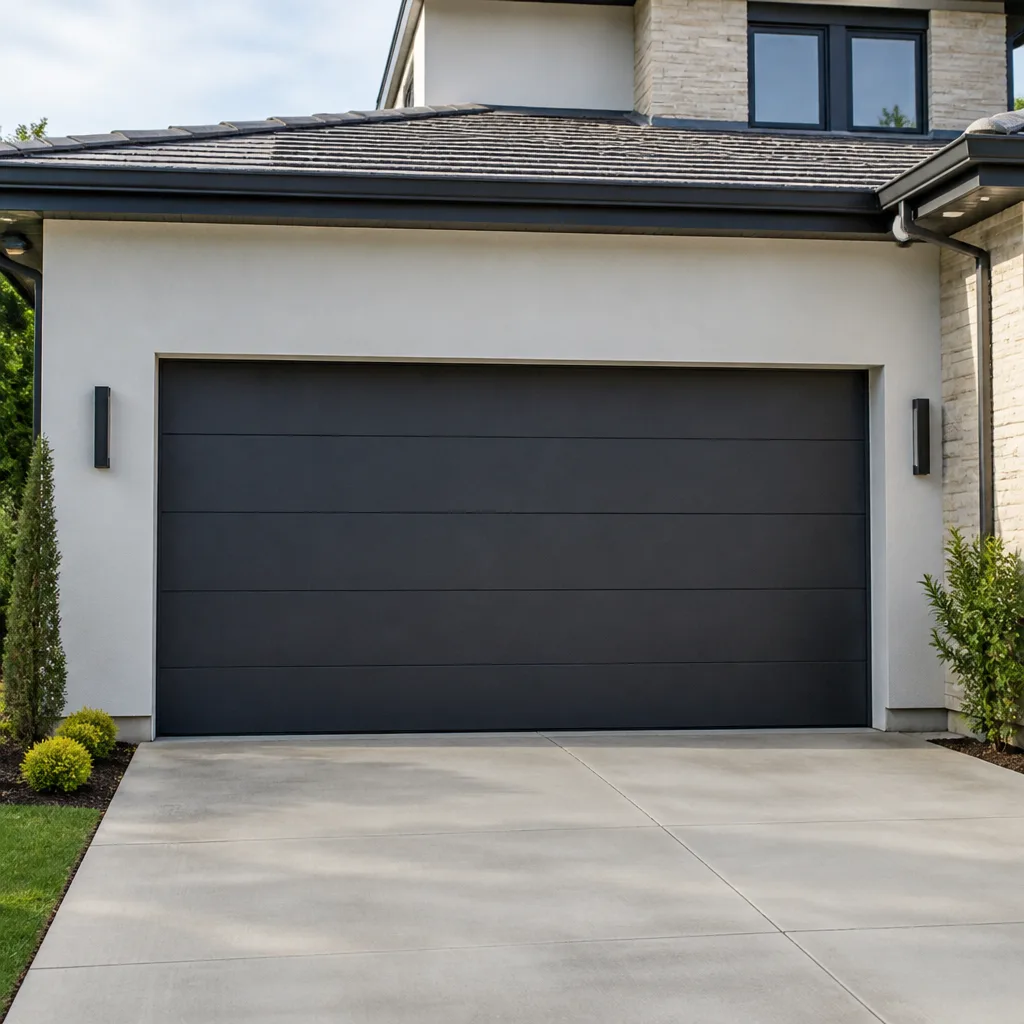 Modern flush
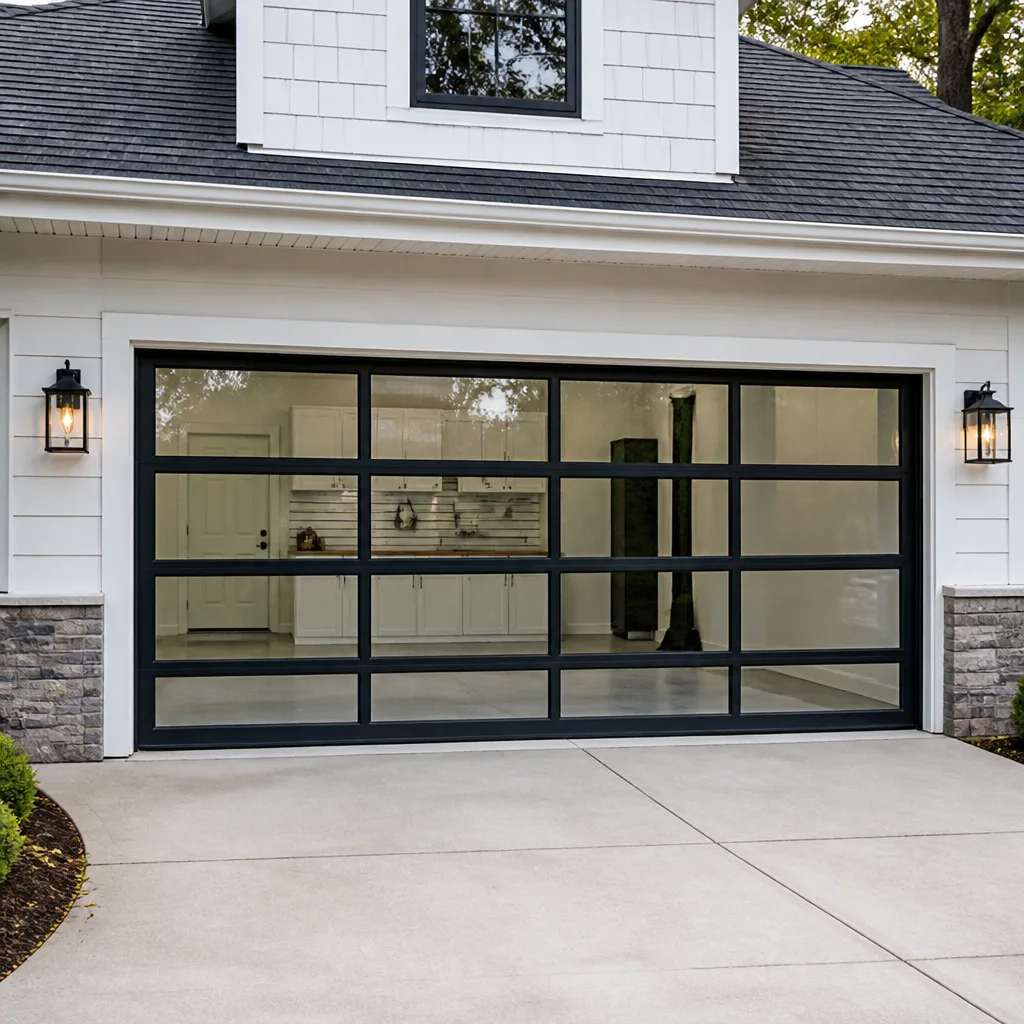 Full-view glass
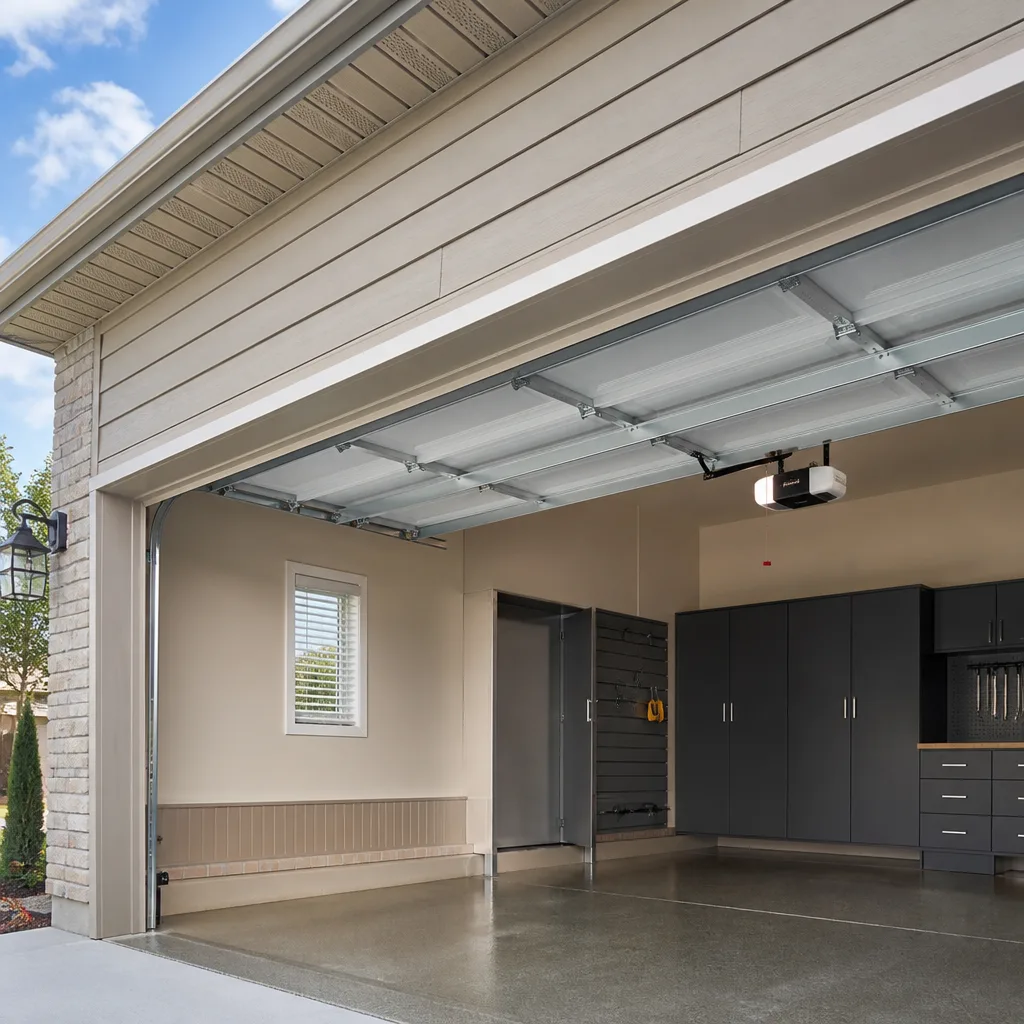 LiftMaster openers
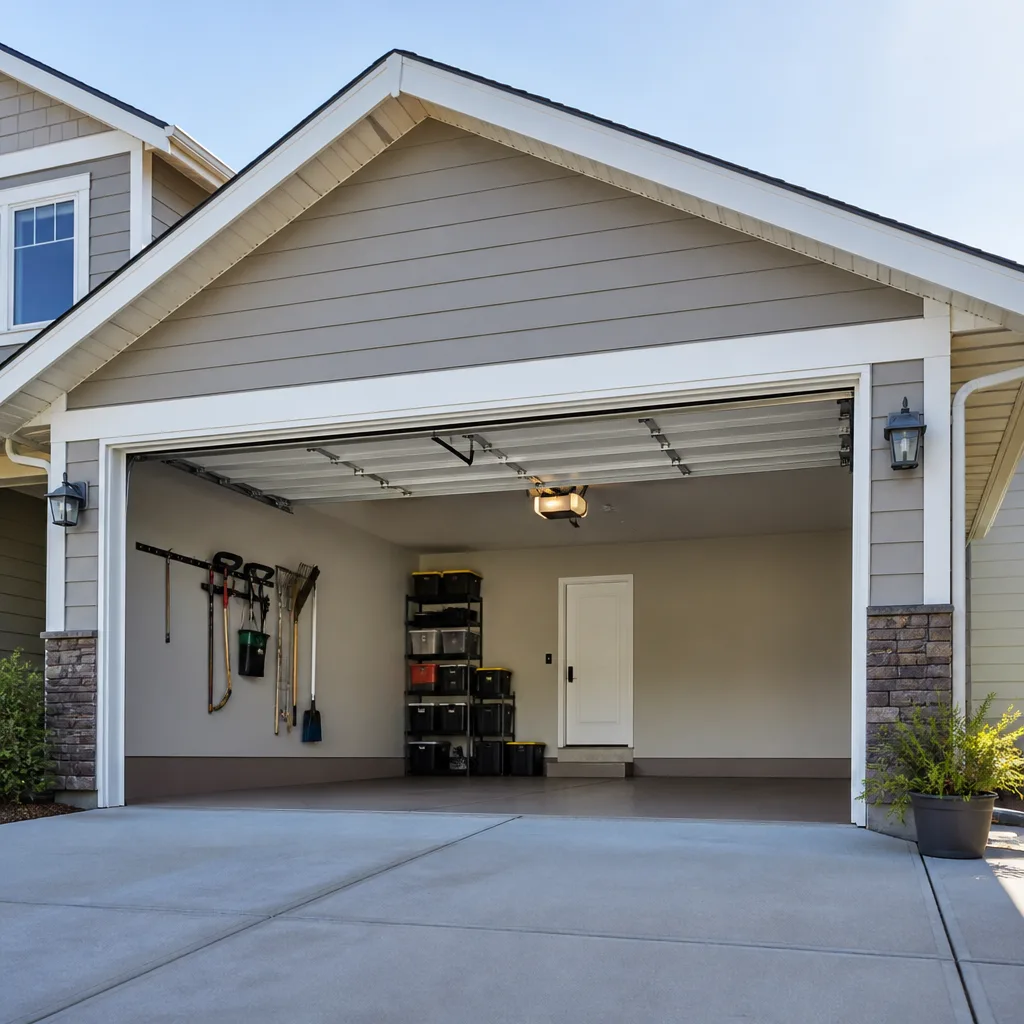 Chamberlain openers
Full 25-point door and opener safety check with every visit - springs, cables, rollers, tracks, and your LiftMaster or Chamberlain opener included
You get a price before we start. It does not change when the truck arrives.
Get your free estimateDIY vs Professional Garage Door: The Cathedral City Homeowner’s Decision Guide
Replacing a garage door bottom seal is a legitimate Saturday project. Adjusting torsion spring tension is not. The difference isn’t your mechanical aptitude, it’s the stored energy involved. A torsion spring under load holds enough force to break bones or worse, and that’s a physics problem, not a skill problem. In Cathedral City, where garage doors cycle dozens of times a week in triple-digit heat, knowing where that line sits saves you money, time, and a trip to the ER. This guide draws the actual line, component by component, so you can make the call with confidence, and you can explore more guides & resources when you’re ready.
Quick Answer
Most garage door maintenance in Cathedral City is genuinely DIY-safe: cleaning sensors, replacing remotes, swapping weatherseal, and lubricating moving parts. But springs, cables, and track realignment should always go to a professional, because those components carry stored mechanical energy that can cause serious injury when released incorrectly. The smart approach is to handle the low-risk upkeep yourself and call a specialist the moment a spring or cable is involved.
Styles & brands we work with
- Raised-panel steel
- Carriage house
- Modern flush
- Full-view glass
- LiftMaster openers
- Chamberlain openers
Table of Contents
- The Real Risk Line: Stored Energy vs. Simple Wear
- DIY-Safe Components: What You Can Handle This Weekend
- Professional-Only Components: Springs, Cables, and Track Work
- Desert-Specific DIY: Cathedral City’s Unique Maintenance Needs
- The Real Cost Comparison: Parts vs. Labor vs. Escalation Risk
- The Dangerous Misread: When an Opener Problem Is Actually a Spring Problem
- What to Have Ready When You Call a Pro
- Common Mistakes to Avoid
- When to Call a Professional
- Frequently Asked Questions
The Real Risk Line: Stored Energy vs. Simple Wear
Garage door components fall into two categories, and the distinction is not about difficulty. It’s about what happens when something goes wrong.
A sensor, a remote, a weatherstrip: if you install it incorrectly, the worst outcome is that it doesn’t work and you try again. A torsion spring, a lift cable, a track bracket: if those fail while you’re working on them, the energy releases into whatever is in its path. That’s the line.
In our experience across Cathedral City, homeowners consistently underestimate how much force a garage door system holds. A standard residential door weighs between 130 and 400 pounds depending on material and size. The torsion spring above the door is wound tight enough to lift that weight every single cycle. When a spring snaps, the sound alone, a crack like a gunshot, tells you how much energy was stored. Working on a live spring without the correct winding bars and training is not a skill gap issue. It’s a safety issue.
Here’s the framework we use when advising homeowners:
- Safe to DIY: Components that are accessible, low-cost to replace, and carry no stored energy. This includes remotes, sensors, weatherseal, rollers (with guidance), and lubrication.
- Professional-only: Components under tension or load, including torsion springs, extension springs, lift cables, bottom brackets, and any track realignment that requires moving the door’s weight-bearing points.
- Gray zone: Opener force and limit adjustments. These are technically user-adjustable, but misadjusting them can mask a deeper spring problem. We’ll cover this in detail below.
Cathedral City’s climate adds another layer. Heat accelerates wear on rubber, plastic, and lubricant. What might be a five-minute visual inspection in a coastal climate is a more demanding maintenance schedule here, and it shifts what’s worth doing yourself versus what’s worth paying for.
DIY-Safe Components: What You Can Handle This Weekend
Here’s the honest list of garage door tasks that a Cathedral City homeowner can do without special tools, special training, or special risk. These are the jobs that make sense to DIY, both financially and practically.
1. Photo Eye Sensor Cleaning and Realignment
The sensors at the bottom of your door tracks get coated in desert dust faster than you’d think. When they’re dirty or slightly misaligned, the door refuses to close and reverses, which is actually the system working correctly, but it’s annoying. Cleaning them is simple:
- Wipe the sensor lenses with a dry microfiber cloth. If the dust is caked on, a slightly damp cloth works too.
- Check that both sensors face each other directly. A gentle bump from a trash can or car bumper knocks them out of alignment.
- Look at the indicator lights. Most brands, including Genie and LiftMaster, show a solid light when aligned and a blinking light when not.
- Tighten the wing nut on the sensor bracket if it’s loose.
This takes about ten minutes and costs nothing. In Cathedral City, where fine dust from the Coachella Valley settles on everything, doing this every two months prevents most “the door won’t close” service calls.
2. Remote and Keypad Battery Replacement
This one barely needs explaining, but here’s a useful detail: if your remote works intermittently and the battery isn’t the fix, the problem is often the opener’s receiver logic board, not the remote itself. Chamberlain and LiftMaster remotes use rolling code technology, and sometimes they simply desynchronize. Reprogramming is another DIY job, and the steps are printed right on the opener motor housing.
3. Bottom Seal Replacement
Cathedral City sun destroys rubber. The bottom seal on your door, the strip that keeps dust, heat, and the occasional lizard out of your garage, cracks and hardens after two to three desert summers. Replacing it is genuinely DIY-friendly:
- Order a replacement seal that matches your door brand. Clopay and Wayne Dalton use different retainer shapes, so match what you have rather than buying universal.
- Close the door, disconnect the opener (pull the red release handle), and lift the door manually if needed for access.
- Pull the old seal out of the retainer channel. If it’s brittle, pull it in sections.
- Feed the new seal through the retainer. A spray of silicone lubricant helps if it binds.
- Trim the ends, reconnect the opener, and test.
Parts cost $15 to $45 depending on door width. A professional replacement in Cathedral City typically runs $85 to $150 – see our Garage Door Cost Breakdown: The Cathedral City Homeowner’s Reference for 2026 for fuller pricing. That’s a DIY win, if you have 45 minutes and don’t mind working at ground level.
4. Roller Lubrication
This is the highest-value DIY task on this list, especially before summer. Cathedral City’s heat thins out lubricant and causes metal-on-metal friction in the rollers and hinges. Here’s the right way:
- Use a garage door specific lubricant, ideally a lithium or silicone spray, not WD-40. WD-40 displaces moisture but doesn’t lubricate long-term.
- Apply to the roller bearings, hinges, and the torsion spring coil surface.
- Wipe away excess with a rag.
- Run the door through a full cycle to distribute.
Do this every three months in Cathedral City’s climate. It extends the life of every moving component and costs about $8 per application.
Professional-Only Components: Springs, Cables, and Track Work
This section is not negotiable. These components require professional service, full stop.
Torsion Springs
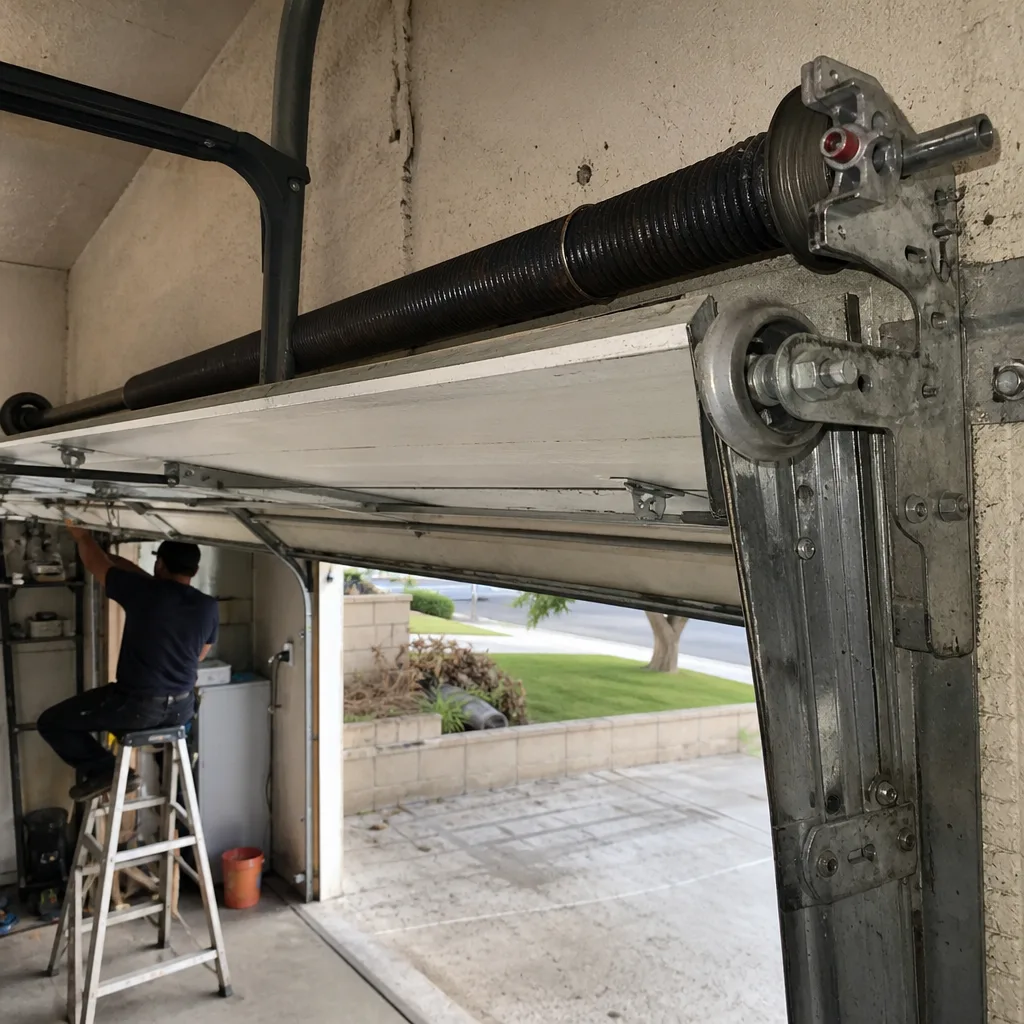
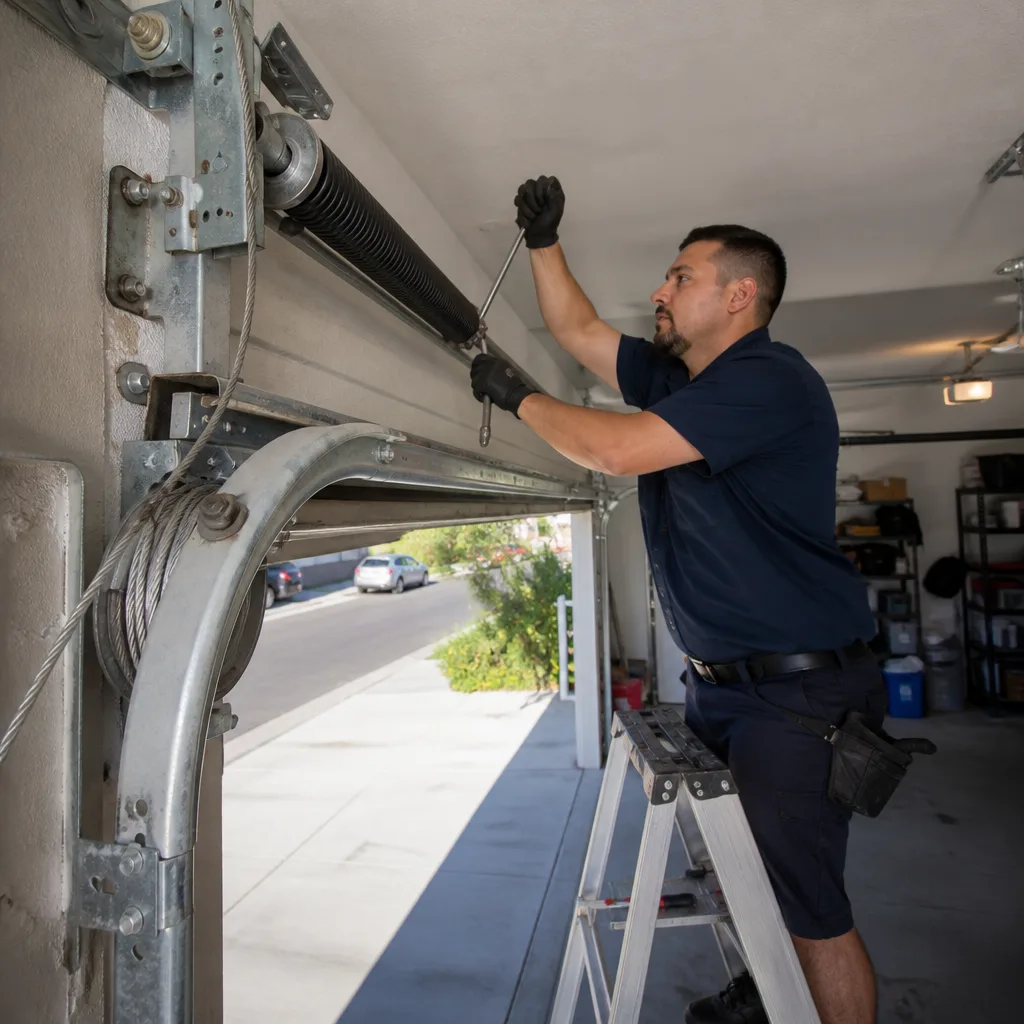
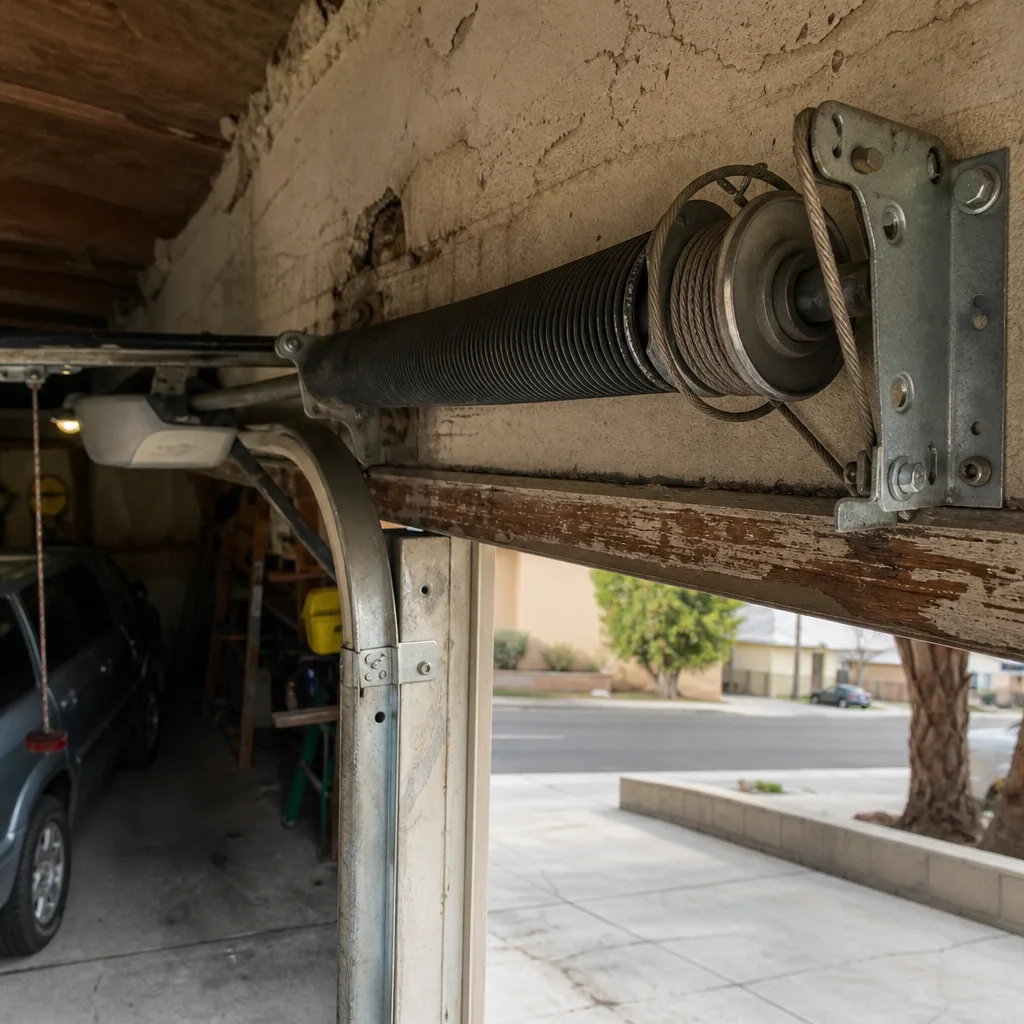
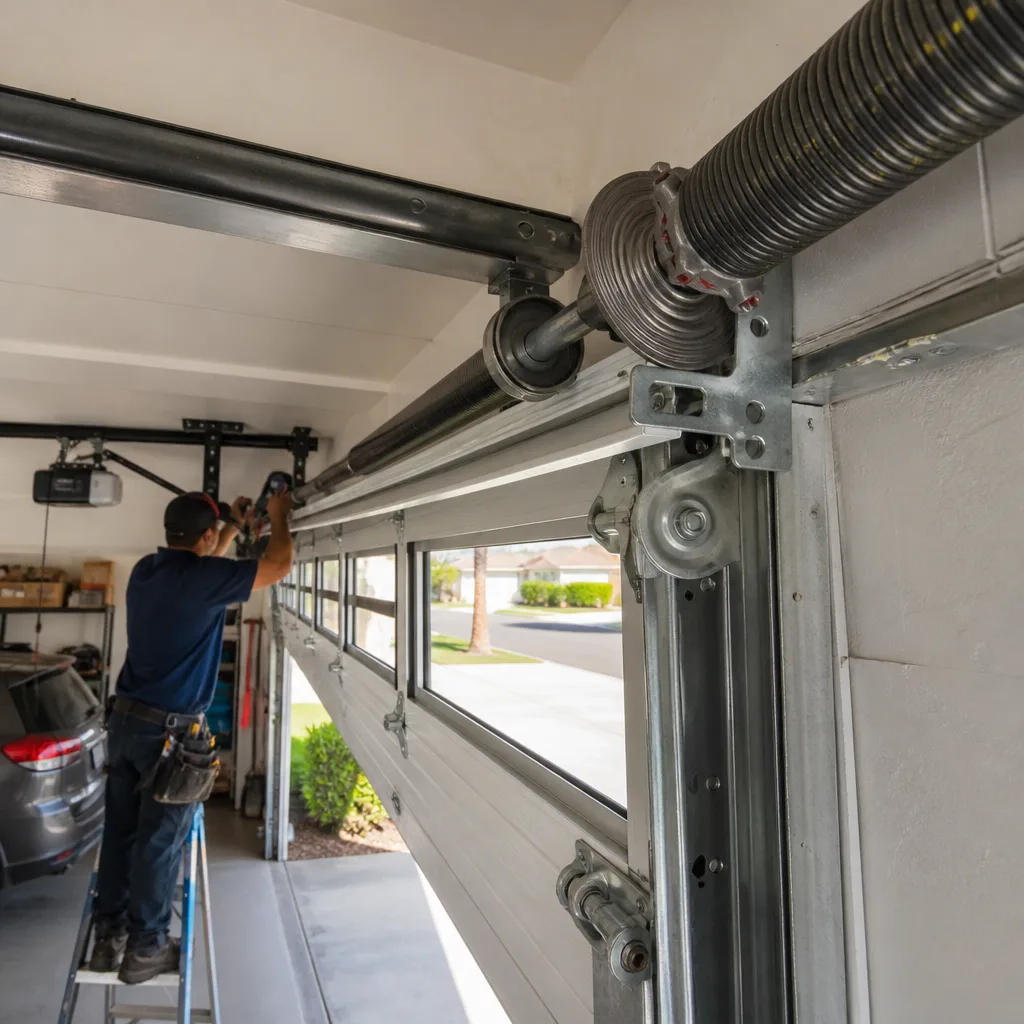
A torsion spring is a tightly wound coil mounted above the door opening. It stores the mechanical energy that lifts the door. When a technician works on one, they use two solid steel winding bars inserted into the winding cone and carefully add or release quarter-turns of tension. A slip during this process releases hundreds of pounds of rotational force instantly. The bars become projectiles. Hands, forearms, and faces are directly in the path.
No YouTube video makes this safe. The winding bars are not “basically big screwdrivers.” The technique requires feel and experience that only comes from doing it repeatedly. In Cathedral City, where garage doors see above-average daily cycles (many homes use the garage as the primary entry), springs wear out faster and need replacement more often – one reason to review our Garage Door Emergency Preparedness Guide for Cathedral City Homes. That’s normal. It’s also a scheduling issue, not a DIY invitation.
A typical torsion spring replacement for a single door runs $180 to $340 in Cathedral City, including parts and labor. That’s a known cost. The alternative, attempting it yourself and getting hurt, carries costs that don’t fit on an invoice.
Extension Springs and Safety Cables
Extension springs run along the horizontal tracks on either side of the door. Older Cathedral City homes often have these. They stretch and contract, and when they fail, the spring can fly across the garage. Modern code requires a safety cable threaded through the spring to contain it if it breaks, but many older installations in Cathedral City predate that requirement.
If your door uses extension springs and you can see that the safety cable is missing, frayed, or disconnected, call a professional. This is also true for any spring work, even on a door that uses extension springs, which look less intimidating than torsion springs. The risk profile is similar.
Lift Cables
The cables on either side of the door work with the springs to balance the load. When a cable frays or snaps, the door can drop suddenly or hang unevenly. A cable that has come off its drum looks like a simple spooling fix, but re-seating it correctly requires de-tensioning the spring first. If you skip that step and try to force the cable back on, you’re working against the spring’s full force. That’s how injuries happen.
Track Realignment
If you can see visible gaps between the rollers and the track, or if the door scrapes and shudders as it moves, the track has shifted. Realigning it means loosening the track brackets, repositioning the track to factory specs, and re-tightening while the door is supported. This is not complicated in principle, but it requires a second person, proper support for the door’s weight, and an understanding of how much play is correct. More importantly, visible track problems are often symptoms of a deeper issue, like a failing spring or a weakened bracket, and DIY track adjustment papers over the real problem. In California, permitted work and inspections exist for good reason; see Garage Door Permits, Codes & Inspections in CA: What You Need to Know for details.
Desert-Specific DIY: Cathedral City’s Unique Maintenance Needs
Cathedral City has a specific set of conditions that most generic garage door advice doesn’t account for. Here’s what to own as a homeowner here, and what to watch for.
Dusty Sensors Are a Year-Round Thing
Most guides treat sensor cleaning as an occasional task. In Cathedral City, with the Coachella Valley’s fine airborne dust, it’s routine. If your door reverses for no obvious reason, clean the sensors before you do anything else. It solves the problem about 40% of the time, based on what we see on service calls across the city.
UV-Cracked Weatherseal
Cathedral City averages around 350 days of sunshine per year. That UV exposure breaks down rubber compounds fast. Expect to replace your bottom seal every two to three years, not every five to seven like homeowners in milder climates. Check it by closing the door and looking at the floor line from inside the garage. If you see daylight, the seal is done.
Pre-Summer Roller Lubrication
Mark your calendar for April. Before the heat hits, lubricate your rollers, hinges, and springs. The heat will thin whatever lubricant you apply, so starting the season with a fresh coat gives your door its best chance through July and August. A door that squeaks in May will howl by August, and dry metal wears faster.
Garage Ventilation and Heat Buildup
Cathedral City garages routinely hit 110°F or higher in summer. That heat affects more than your car. It accelerates the aging of plastic gears inside openers, warps uninsulated doors, and shortens the life of garage door opener remotes left sitting in hot cars. Simple fixes help: insulate the garage door if it isn’t already, and avoid storing aerosols or electronics in direct sun inside the garage. These aren’t garage door repairs, but they extend the life of the system.
The Real Cost Comparison: Parts vs. Labor vs. Escalation Risk
The naive DIY vs. pro comparison looks at a part and says: “The spring costs $60 online. A pro charges $300. I’m saving $240.” That math misses the actual economics.
Here’s how the real numbers shake out for common Cathedral City garage door jobs:
Bottom Seal Replacement
- DIY: $15 – $45 for the seal, 45 minutes of time, no special tools. Sensible DIY.
- Professional: $85 – $150 installed. Reasonable if you don’t want to do it, but the DIY savings are real.
Photo Eye Sensor Cleaning
- DIY: $0, ten minutes. Always DIY this.
- Professional: $75 – $120 service call, which is fair if the problem turns out to be a bad sensor, but overkill for dust.
Torsion Spring Replacement
- DIY: $60 – $120 for the spring pair, but you must buy the correct wire size, length, and inner diameter. Getting any of these wrong means the door won’t balance, or the spring fails prematurely. Then there’s the injury risk.
- Professional: $180 – $340 for a single door, $250 – $500 for a two-spring system with heavier doors. Includes correct sizing, balance testing, and safe disposal of the old spring.
Now here’s the part most cost comparisons miss: the escalation risk. A misdiagnosed DIY repair doesn’t just fail to fix the problem, it often creates a new one. For example, if the door is heavy because a spring has lost tension, and you respond by cranking up the opener’s force setting, you’re asking a motor to do a spring’s job. The opener burns out within months. Now you’re paying for a new opener ($250 – $500 plus labor) and the spring replacement you needed in the first place. The $240 you “saved” on the spring became a $700 repair.
That’s the real DIY vs. pro math: it’s not parts vs. labor, it’s the cost of doing it right the first time vs. the cost of fixing a cascade of failures.
The Dangerous Misread: When an Opener Problem Is Actually a Spring Problem
This is the most common dangerous misdiagnosis we see in Cathedral City, and it’s worth its own section because it’s where DIY logic most often goes wrong.
The scenario: your garage door opener strains, or the door opens a few inches and stops, or the opener runs for a second and shuts off. You assume the opener is failing. You start troubleshooting the opener, or worse, you start adjusting the opener’s force and travel limits to “give it more power.”
Here’s the test that tells you whether you’re dealing with an opener issue or a spring issue:
- Pull the red release handle to disconnect the opener from the door.
- Lift the door manually to waist height.
- Let go.
If the door stays roughly where you left it, or moves only slightly, the springs are doing their job and the problem is likely the opener. If the door slams down or feels heavy in your hands, the springs are shot and the opener has been compensating for them, which is exactly why it’s failing.
This test takes 30 seconds and it changes the entire repair picture. A door that won’t stay up has a spring problem, no matter what the opener is doing. Replacing the opener without addressing the springs means the new opener inherits the same overload and fails early. In Cathedral City, where many homes have original openers from the early 2000s running on original springs, we see this exact scenario play out several times a month.
If your door fails this test, call a professional. If it passes and the opener is still struggling, then you’re looking at a genuine opener repair or replacement issue, which is a different diagnostic path.
What to Have Ready When You Call a Pro
When you do decide to call a professional, the difference between a smooth one-visit fix and a two-visit ordeal is usually information. Here’s what a multi-brand specialist needs to know before they arrive:
- The door brand. Look for the label on the inside of the door panel or on the track. Common brands in Cathedral City include Clopay, Amarr, and Wayne Dalton. If you can’t find it, a photo of the door from inside helps.
- The opener brand and model. The model number is usually on the motor housing. LiftMaster, Chamberlain, and Genie are the most common in this area, and the model number tells a technician what parts to load before dispatch.
- The symptom, described precisely. Not “it’s broken.” But “it opens halfway, pauses, and reverses” or “it makes a grinding noise only when closing.” The more specific you are, the better the first-visit diagnosis.
- When the problem started. Was it sudden or gradual? A spring that snapped makes a loud noise and fails instantly. A spring that’s losing tension fails gradually over weeks. That distinction matters.
- A rough sense of the door’s age. If you’ve been in the house five years and don’t know the door’s history, say that. A 1990s wood door has different parts availability than a 2015 steel door.
Having this ready saves time and prevents a technician from making a second trip for parts. A shop that trains on multiple brands can cross-reference what you have and arrive prepared.
Common Mistakes to Avoid
- Lubricating with WD-40. WD-40 is a solvent and water displacer, not a lubricant. It strips away the grease your rollers and hinges need. Use a lithium or silicone spray made for garage doors.
- Replacing one spring instead of both. Springs are rated for a certain number of cycles. If one has failed, its partner is usually close behind. Replacing only the broken one saves money today and costs another service call within months. A professional will quote both and explain why.
- Adjusting opener force to fix a heavy door. Covered above, but it bears repeating: if the door is heavy, the springs are the problem. Forcing the opener to work harder burns out the motor.
- Buying universal replacement parts. Universal bottom seals, universal remotes, universal brackets: they sometimes work and sometimes don’t. Brand-specific parts cost a few dollars more and fit the first time. This is especially true for Clopay doors, which use proprietary seal retainers on many models.
- Ignoring a noisy door. A squeak is friction. Friction is wear. In Cathedral City’s dry heat, a door that squeaks in March will be grinding by July. Lubricate early and often.
- Touching a spring “just to look.” There is no safe way to inspect a torsion spring by hand. If you suspect a spring problem, the visual check is: look for a visible gap in the coil about two inches wide. That gap means the spring snapped. If you see it, stop and call a professional.
- Assuming the opener is always the problem. The manual lift test in the previous section solves this. Run it before you spend money on any opener work.
When to Call a Professional
Call a professional any time a spring, cable, or track is involved. Call when the door fails the manual lift test. Call when you’ve cleaned the sensors, replaced the remote battery, and the problem persists. Call when the door makes a sound you’ve never heard before, especially a sharp bang from above the door. Call when the door is visibly uneven in the opening, or when one side closes before the other. Call when you’re not certain what’s wrong and you’d rather have a diagnosis than a guess.
Garage Door Repair in Cathedral City is our core service, and we work on the brand you already have. If you’ve got a LiftMaster opener that’s acting up or a Clopay door that won’t balance, we know those systems. Reliance Garage Door Service offers free estimates in Cathedral City, call (833) 593-4550.
Frequently Asked Questions
No, you should not replace a garage door spring yourself. Torsion springs and extension springs are under high tension and can cause serious injury if mishandled. Hire a licensed professional for all spring work, including replacement and adjustment.
Garage door spring replacement in Cathedral City typically costs $180 to $340 for a single door and $250 to $500 for a two-spring or heavier door system. The price includes correct spring sizing, installation, balance testing, and disposal of the old springs. Call us at (833) 593-4550 for an exact quote based on your door.
You can safely clean photo eye sensors, replace remote and keypad batteries, replace a worn bottom seal, and lubricate rollers, hinges, and springs with a silicone or lithium spray. These tasks require no special tools and carry no stored-energy risk.
If your opener is straining, disconnect it with the red release handle and lift the door manually. If the door is heavy or won’t stay up at waist height, the springs have failed and the opener has been compensating. Replacing the springs first will usually resolve the strain and extend the life of the opener.
In Cathedral City’s hot, dry climate, you should lubricate your garage door’s rollers, hinges, and springs every three months. The heat thins lubricant faster than in coastal climates, and dry conditions accelerate metal-on-metal wear. A pre-summer lubrication in April is especially important.
Yes, we work on all major garage door and opener brands commonly installed in Cathedral City, including LiftMaster, Chamberlain, Genie, Clopay, and more. We’re trained across eight major brands and we service what you already own rather than steering you toward a single manufacturer. Learn more about our Garage Door Opener Repair in Cathedral City services.
The Bottom Line
Garage door DIY in Cathedral City comes down to one question: is there stored energy in what you’re about to touch? Clean the sensors, swap the remote battery, replace the cracked bottom seal, and keep the rollers lubricated. Those jobs are yours, and doing them yourself keeps your door running between professional tune-ups. The moment springs, cables, or track alignment enters the picture, the calculus changes. The risk isn’t a botched repair, it’s a serious injury or an escalating cascade of failures that costs more than the professional fix ever would have. Know the line. Respect the physics. And when the job calls for it, call someone who knows the brand on your door. For Garage Door Installation in Cathedral City or any repair you’d rather not attempt, call (833) 593-4550 for a free estimate.
Explore more guides and services at the Reliance Garage Door Service home page.
Written by the team at Reliance Garage Door Service, serving Cathedral City since 2016.
See the difference
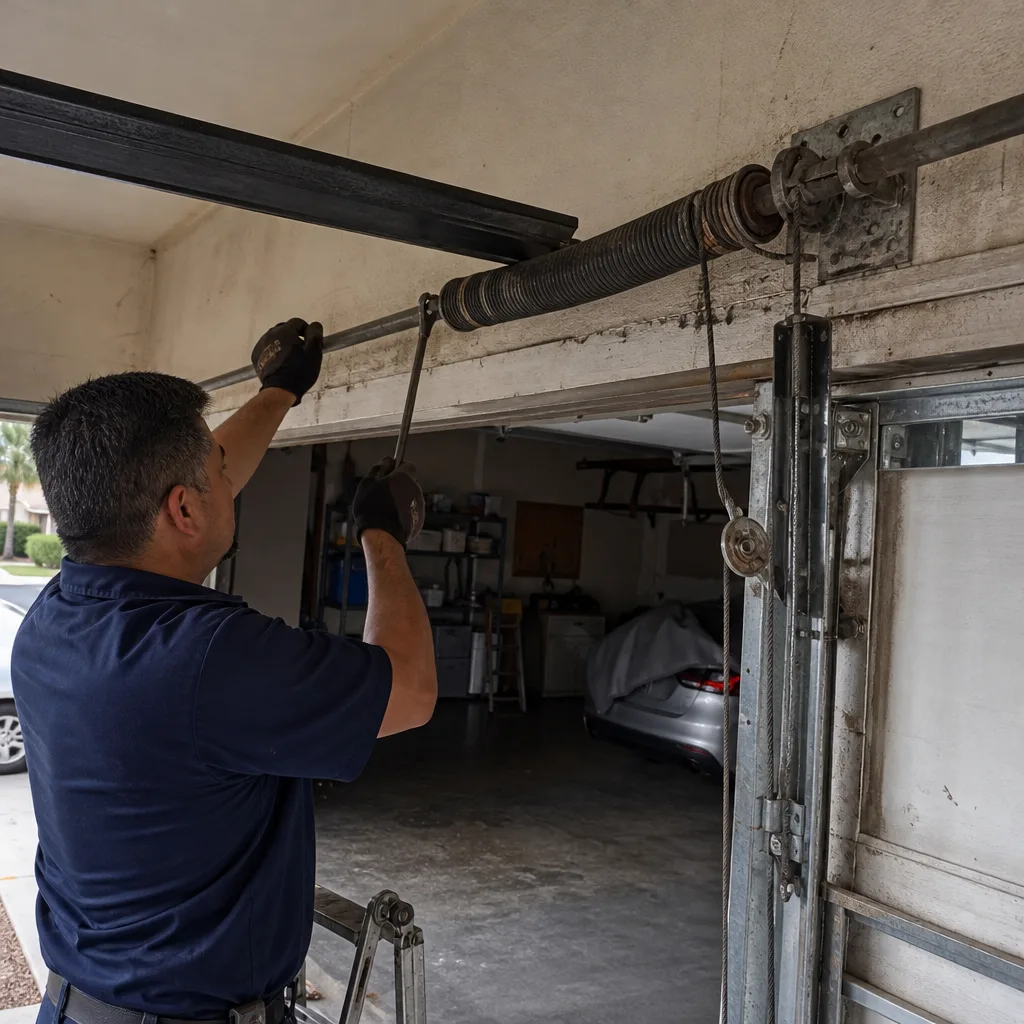 Before
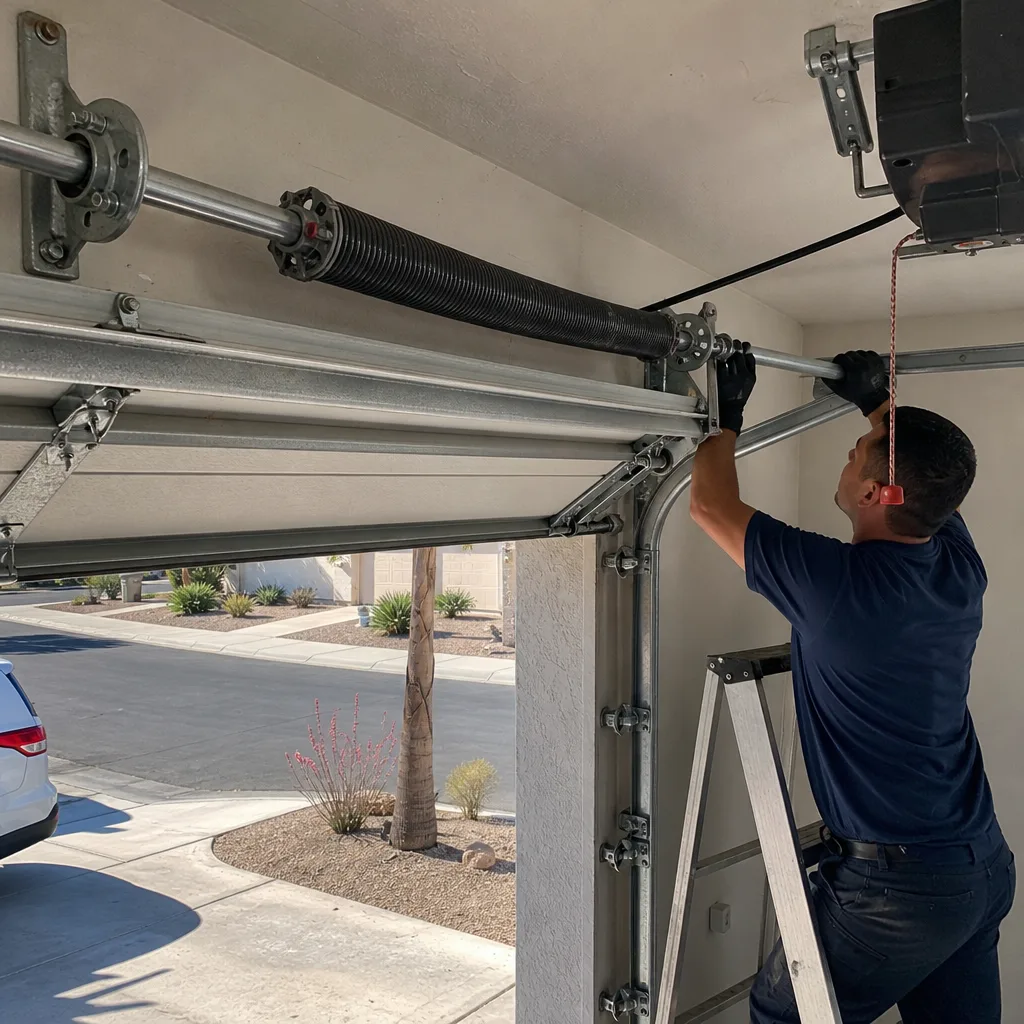 After
 Before
 After
 Before
 After